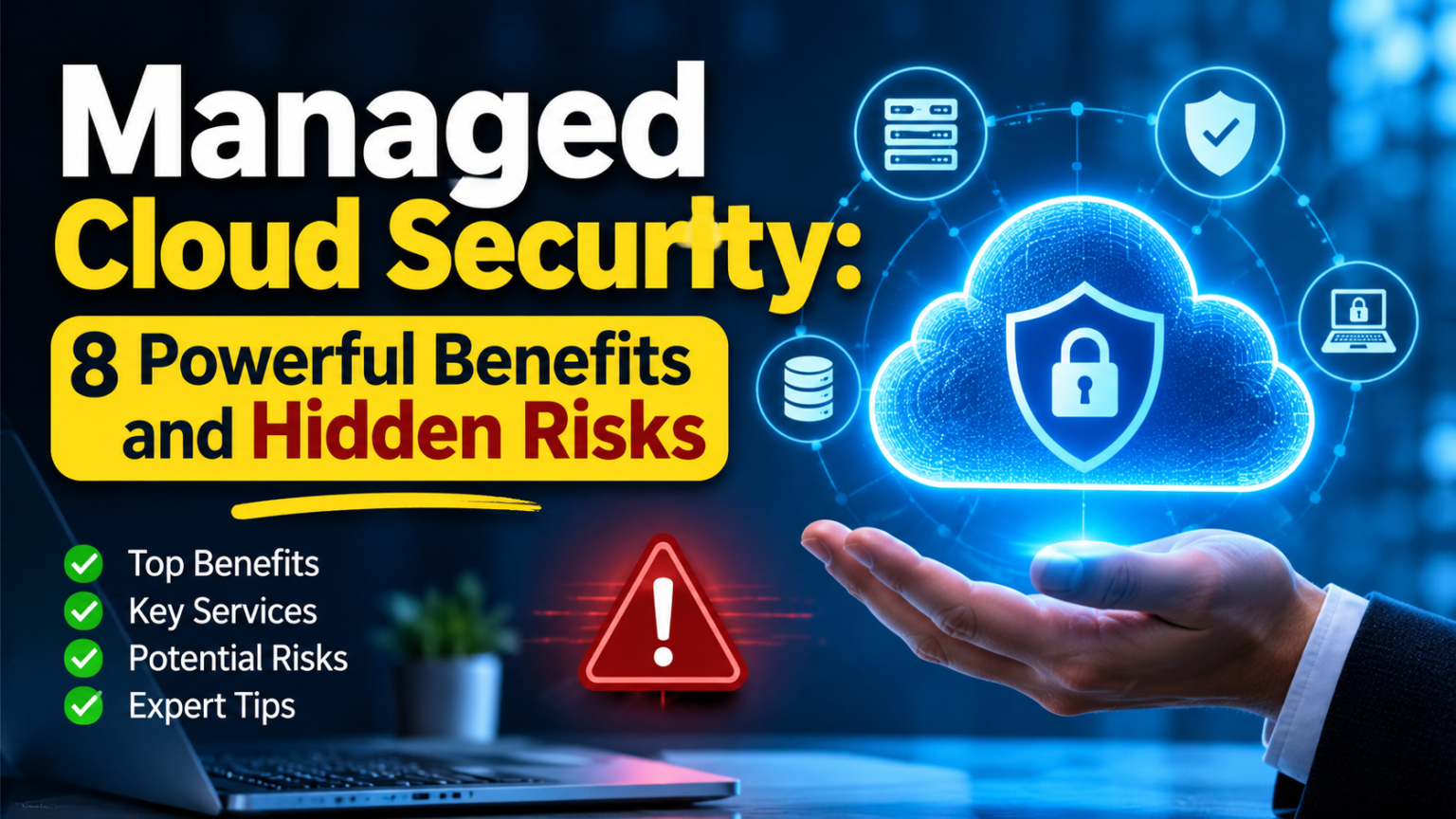
Managed Cloud Security helps businesses protect their cloud-based systems, applications, and sensitive information with support from external security specialists. As companies move more operations online, protecting cloud environments has become an important part of business security.
However, cloud security involves more than installing software or setting up a firewall. Organizations must manage user permissions, monitor suspicious activity, protect data, identify vulnerabilities, and respond to potential incidents. These responsibilities can become challenging for businesses with limited IT resources.
Managed cloud security services help address these challenges by providing professional expertise, security tools, and ongoing monitoring. They can support businesses using public, private, or hybrid cloud environments.
In this guide, you will learn what managed cloud security means, how it works, its major benefits, common services, possible risks, and why your business may need it. You will also find useful information about managed cloud security PPT presentations and relevant certification paths.
What Is Managed Cloud Security?
Managed Cloud Security is an arrangement in which an external service provider manages or supports specific security responsibilities for a company’s cloud environment. These responsibilities may include monitoring cloud systems, protecting sensitive data, managing access, identifying vulnerabilities, and responding to security threats.
Instead of handling every security task internally, a business works with specialists who provide services according to an agreed service plan.
Common managed cloud security services include:
- Cloud infrastructure monitoring
- Threat detection and incident response
- Identity and access management
- Vulnerability assessments
- Data encryption and protection
- Cloud security configuration
- Compliance support
- Security reporting
For example, an online store may use cloud hosting to manage its website, customer accounts, and business records. A managed security provider can help monitor suspicious login attempts, review access permissions, and identify weaknesses in its cloud configuration.
The provider’s responsibilities depend on the contract. Outsourcing security support does not mean the business transfers every security responsibility to another company.
How Does Managed Cloud Security Work?
Managed cloud security combines technology, professional expertise, and security processes. The provider first understands the organization’s cloud infrastructure and identifies the areas that need protection.
The process usually involves five stages.
1. Cloud Security Assessment
The provider reviews cloud infrastructure, applications, user accounts, and existing security settings. This helps identify weaknesses such as excessive permissions, exposed resources, and insecure configurations.
2. Security Configuration
After the assessment, the provider helps configure appropriate security controls. These may include firewalls, encryption, multi-factor authentication, access restrictions, and security logging.
3. Continuous Monitoring
The provider monitors agreed cloud resources for suspicious activities. For instance, repeated failed login attempts or unexpected access to sensitive files may trigger an alert for investigation.
4. Threat Detection and Response
When suspicious activity is detected, security professionals investigate the alert and follow the agreed response procedure. Depending on the service, they may help restrict access, isolate affected resources, or notify the organization’s IT team.
5. Reporting and Improvement
Regular reports help businesses understand security events, identified weaknesses, and recommended improvements. The provider can also review security controls as the company’s cloud environment changes.
8 Powerful Benefits of Managed Cloud Security
Managed cloud security can offer several advantages, especially for organizations that do not have a large internal cybersecurity team.
1. Access to Experienced Security Professionals
Finding and hiring skilled cloud security specialists can be difficult for some businesses. Managed services provide access to professionals with experience in cloud infrastructure, security monitoring, identity management, and threat response.
Their expertise can help organizations identify weaknesses and choose suitable security controls.
2. Continuous Security Monitoring
Cybersecurity threats do not follow regular business hours. Depending on the service agreement, a managed provider may offer 24/7 monitoring of selected cloud resources.
This can help identify suspicious activities sooner and give security teams more time to investigate potential incidents.
However, continuous monitoring does not guarantee that every attack will be detected or prevented.
3. Stronger Data Protection
Businesses often store customer details, financial records, employee information, and confidential documents in cloud environments.
Managed cloud security can support data protection through:
- Encryption
- Access restrictions
- Data loss prevention controls
- Secure backup management
- Activity monitoring
These measures help reduce the risk of unauthorized access and accidental data exposure when correctly implemented.
For a broader understanding of how organizations protect sensitive information, read this guide to information security. It explains the wider principles behind protecting information from unauthorized access, alteration, and loss.
4. Compliance and Audit Support
Many businesses must follow privacy laws, industry standards, and contractual security requirements. Managed security providers can help review security controls, maintain documentation, and prepare information for audits.
However, hiring a managed provider does not automatically make an organization compliant. The business must still understand and meet its own legal and regulatory obligations.
5. Reduced Workload for Internal IT Teams
Internal IT employees often manage system maintenance, troubleshooting, software updates, and technical support. Adding continuous security monitoring and incident investigation can increase their workload.
A managed provider can take responsibility for agreed security activities, allowing internal teams to focus on other business priorities.
6. Better Visibility Across Cloud Environments
Organizations using several cloud platforms may struggle to monitor every system from one place.
Managed cloud security can improve visibility through centralized logs, monitoring dashboards, alerts, and reports. This makes it easier to review unusual activities and understand potential security weaknesses.
7. Flexible Support as Businesses Grow
As a company expands, it may add more employees, applications, cloud storage, and connected services. Its security requirements will also change.
Managed services can be adjusted to support new workloads and security needs. This helps businesses expand their protection without building every security capability internally.
8. More Organized Incident Response
A security incident can create confusion when employees do not know who should investigate it or what actions they should take.
A managed provider can help establish response procedures, define responsibilities, and set escalation processes. A clear plan supports a more coordinated response when suspicious activity occurs.
Common Managed Cloud Security Services
Managed cloud security is not one single product. It includes several services designed to address different security requirements.
Cloud Security Monitoring
Monitoring services review cloud activity, system logs, and security alerts. Their purpose is to identify unusual behavior and provide information for investigation.
Identity and Access Management
Identity and access management controls who can access cloud resources. It may include multi-factor authentication, role-based permissions, and privileged account monitoring.
Cloud Vulnerability Management
Vulnerability management involves identifying weaknesses in cloud systems, applications, and configurations. Providers may conduct assessments and recommend corrective actions.
Managed Detection and Response
Managed Detection and Response (MDR) combines threat monitoring, investigation, and response support. It helps organizations manage security alerts and investigate suspicious activities.
Cloud Data Protection
Data protection services may include encryption, backup monitoring, access restrictions, and data loss prevention. These controls help protect sensitive information from unauthorized access or accidental loss.
Compliance and Security Reporting
Providers may help businesses review security controls, maintain relevant documentation, and prepare reports for internal reviews or external audits.
Managed Cloud Security: Advantages and Disadvantages
Managed cloud security can improve an organization’s protection, but businesses should also understand its limitations before choosing a provider.
Advantages
- Access to experienced security professionals.
- Monitoring based on the selected service level.
- Reduced workload for internal IT teams.
- Access to professional security tools.
- Better visibility into cloud security events.
- Support with security documentation and audits.
Disadvantages
- Ongoing service fees can increase operating costs.
- Businesses may become dependent on an external provider.
- Sharing security information requires careful privacy controls.
- Poor communication may delay incident handling.
- Some providers may not support every cloud platform.
- Outsourcing does not remove the organization’s security responsibilities.
The best approach is to compare providers carefully and define responsibilities before signing an agreement.
Managed Cloud Security PPT: What Should a Presentation Include?
People searching for a managed cloud security PPT may need presentation material for a business meeting, classroom assignment, employee training session, or technical discussion.
A useful presentation should explain the subject in a clear and logical order. Consider including these slides:
- Introduction: Explain managed cloud security and its importance.
- Common Cloud Threats: Discuss misconfigurations, unauthorized access, phishing, and data exposure.
- How It Works: Present assessment, configuration, monitoring, and response.
- Key Benefits: Explain professional expertise, monitoring, and data protection.
- Managed Security Services: Introduce MDR, access management, and vulnerability management.
- Risks and Challenges: Cover service costs, provider dependency, and shared responsibilities.
- Business Example: Show how a company can protect its cloud-based customer information.
- Conclusion: Summarize the importance of a planned cloud security strategy.
Use simple diagrams to explain cloud infrastructure and the responsibilities of the business, cloud provider, and managed security provider. Avoid presenting managed security as a guarantee against cyberattacks.
Managed Cloud Security Certification: Skills and Learning Paths
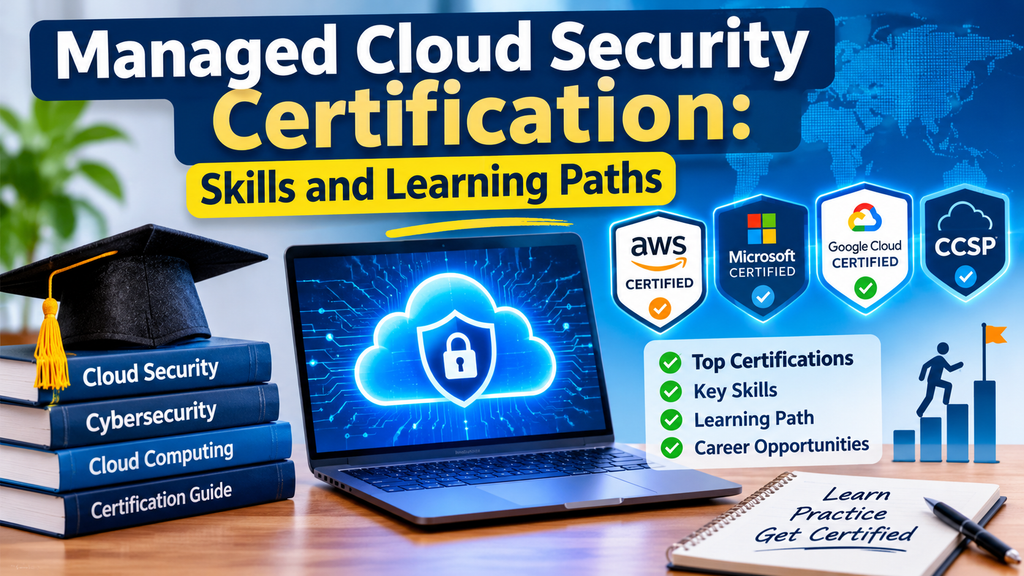
A managed cloud security certification can help IT professionals demonstrate knowledge of cloud technologies, security controls, and risk management. It can also help beginners understand the skills required for cloud security roles.
There is no single certification that covers every managed cloud security service. The most suitable option depends on your experience and chosen cloud platform.
Some relevant certification paths include:
- AWS Certified Security – Specialty: Focuses on security knowledge related to Amazon Web Services environments.
- Microsoft Certified: Azure Security Engineer Associate: Covers security implementation and management in Microsoft Azure.
- Google Cloud Professional Cloud Security Engineer: Focuses on designing and implementing security controls in Google Cloud.
- Certified Cloud Security Professional (CCSP): Covers broader cloud security concepts, architecture, governance, and risk management.
Certification names, exam requirements, and availability can change. Always check the official certification provider’s website before registering.
For beginners, a practical learning path is to understand networking, operating systems, identity management, and basic cybersecurity first. Then, study a cloud platform and practise configuring its security controls.
Why Does Your Business Need Managed Cloud Security?
The need for managed cloud security depends on the size of an organization, the sensitivity of its information, its cloud infrastructure, and its internal security capabilities.
It may be particularly useful for businesses that:
- Store customer or financial information in the cloud.
- Operate websites or applications that need reliable availability.
- Use multiple cloud platforms.
- Have a small internal IT or cybersecurity team.
- Need support with security monitoring and incident response.
- Must demonstrate security controls to customers or auditors.
For example, a growing software company may have employees and developers working across different cloud environments. Without appropriate access controls and monitoring, a compromised account or insecure configuration could expose important resources.
A managed provider can help review permissions, monitor activity, and improve security procedures.
Before choosing a service, identify the systems that need protection and the risks that matter most. This will help you select services that address real business requirements instead of paying for unnecessary features.
How to Choose the Right Managed Cloud Security Provider
Choosing a provider requires careful evaluation because it may have access to sensitive security information and parts of your cloud environment.
Review these factors before making a decision:
Cloud platform experience: Confirm that the provider understands the platforms your organization uses, such as AWS, Microsoft Azure, or Google Cloud.
Service coverage: Ask exactly what the service includes. Does it provide monitoring, vulnerability management, incident response, or only security configuration?
Incident response process: Understand how alerts are investigated, who is contacted, and what response times are included in the agreement.
Data privacy: Review how the provider accesses, stores, and protects your information.
Reporting: Request sample reports to understand how security events and recommendations will be communicated.
Service-level agreement: Check availability, response expectations, responsibilities, and service exclusions.
Scalability: Make sure the provider can support your future cloud requirements.
Do not select a provider based only on price. A suitable provider should understand your business environment and explain clearly how its services support your security goals.
Best Practices for Stronger Cloud Security
Managed services work best when combined with responsible security practices inside the organization.
Businesses should:
- Enable multi-factor authentication for important accounts.
- Give users only the permissions they need.
- Review access rights regularly.
- Encrypt sensitive information where appropriate.
- Apply security updates and patches promptly.
- Maintain and test backups.
- Monitor cloud configurations for weaknesses.
- Train employees to recognize phishing attempts.
- Establish a clear incident response plan.
- Review the provider’s performance regularly.
Cloud security is a shared responsibility. Cloud providers protect parts of the underlying infrastructure, while customers remain responsible for certain configurations, identities, applications, and data. The exact division depends on the cloud service being used.
The NIST Guidelines on Security and Privacy in Public Cloud Computing provide additional guidance on evaluating cloud security and privacy risks. The publication discusses important considerations when organizations outsource data, applications, and infrastructure to public cloud environments.
Frequently Asked Questions
1. What is managed cloud security used for?
Managed cloud security helps businesses protect cloud infrastructure, applications, accounts, and data. Services may include monitoring, threat detection, access management, vulnerability assessments, and incident response.
2. Is managed cloud security suitable for small businesses?
Yes. Small businesses can use managed security services when they lack the staff or expertise to manage cloud security internally. The service should match their risks, budget, and technical requirements.
3. What is the difference between cloud security and managed cloud security?
Cloud security refers to the technologies, policies, and practices used to protect cloud environments. Managed cloud security involves an external provider managing or supporting some of those security activities.
4. Which certification is useful for cloud security?
The best certification depends on your chosen platform and experience. AWS Certified Security – Specialty, Microsoft Azure Security Engineer Associate, Google Cloud Professional Cloud Security Engineer, and CCSP are relevant learning paths.
5. Does managed cloud security prevent all cyberattacks?
No. Managed cloud security can reduce risks, improve monitoring, and support incident response, but no service can guarantee complete protection. Businesses still need effective security policies, employee awareness, and regular reviews.
Conclusion
Managed Cloud Security helps businesses protect cloud environments through professional monitoring, access management, vulnerability assessments, and incident response support. It also provides access to security expertise without requiring organizations to build every capability internally.
However, outsourcing security does not remove business responsibility. Companies must understand their cloud risks, choose reliable providers, review service agreements, and maintain appropriate internal security practices.
Whether you are researching managed cloud security for a business decision, preparing a PPT, or exploring a cloud security certification, understanding these services is a useful starting point. The right strategy should match your organization’s needs, protect important information, and support long-term business growth.