Choosing the right cybersecurity partner is an important decision for every business. A reliable provider can protect sensitive information, reduce security risks, and help organizations respond to cyber threats. However, selecting the wrong company can leave critical systems exposed and create expensive problems.
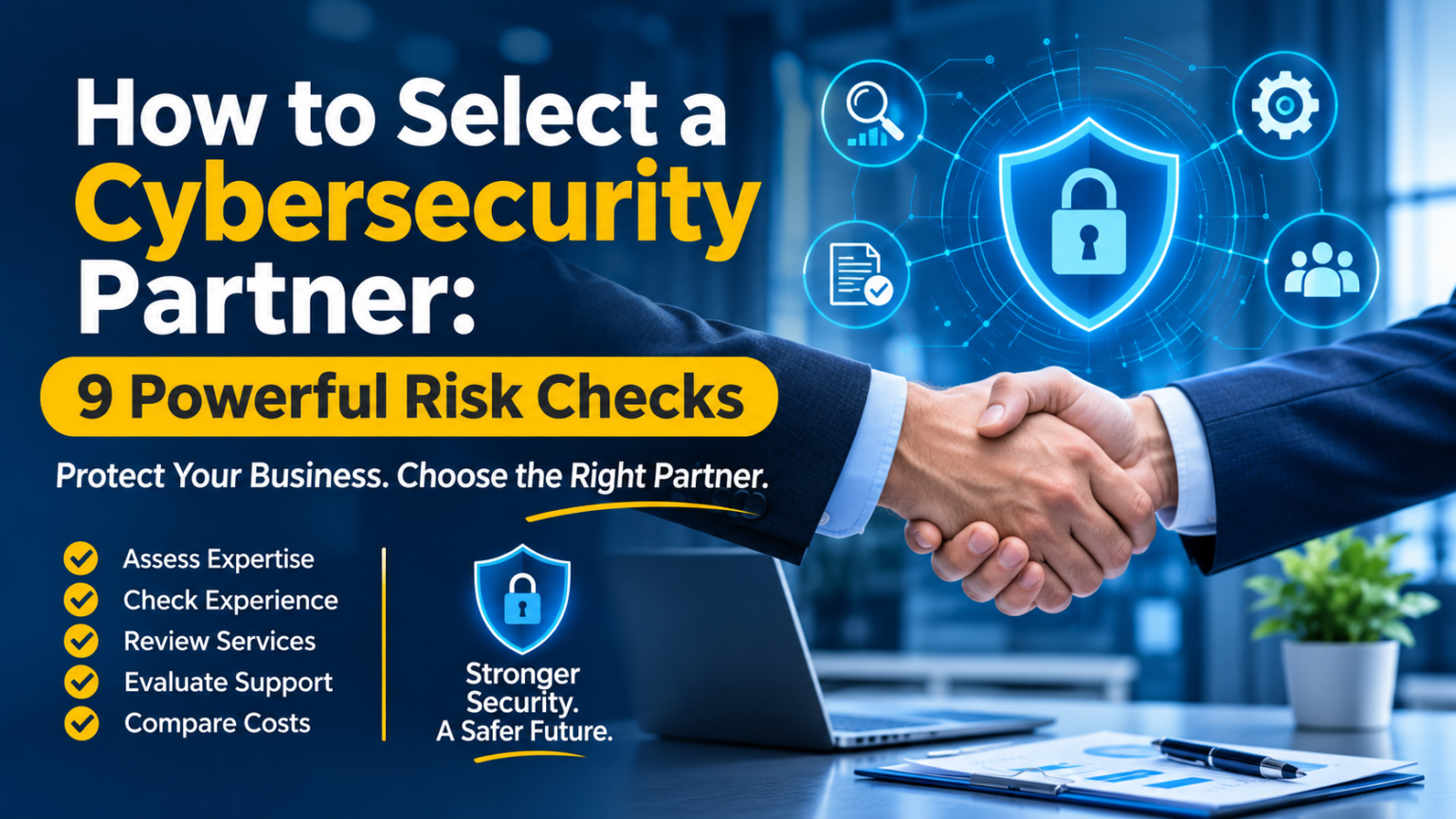
How to Select a Cybersecurity Partner depends on more than comparing prices or choosing a company with an impressive website. Businesses need to evaluate technical expertise, industry experience, security services, communication, and long-term support before making a decision.
Cyber threats affect organizations of every size. Small businesses, growing companies, and large enterprises all need a reliable security strategy. The right cybersecurity partner can identify weaknesses, recommend suitable solutions, and protect essential business operations.
This guide explains nine important factors to consider, the questions to ask potential providers, and the mistakes businesses should avoid before signing an agreement.
Why Choosing the Right Cybersecurity Partner Matters
Cybersecurity involves much more than installing antivirus software or setting up a firewall. It includes protecting networks, applications, devices, cloud environments, and business information from unauthorized access and cyberattacks.
A professional cybersecurity partner helps organizations understand their security weaknesses and develop suitable protection strategies.
For example, an e-commerce business may need website security, payment protection, and secure cloud systems. A company with remote employees may require stronger access controls and endpoint protection.
Working with the right provider offers several benefits:
- Better threat protection: Security professionals can identify vulnerabilities and recommend appropriate safeguards.
- Reduced business disruption: Effective monitoring and incident response can limit the impact of security incidents.
- Expert guidance: Businesses gain access to specialized knowledge without necessarily hiring a large internal security team.
- Improved compliance: Experienced providers can help organizations understand relevant security and regulatory requirements.
- Long-term planning: A reliable partner can update security strategies as technology and threats change.
These benefits depend on choosing a provider whose capabilities match your organization’s actual needs.
How to Select a Cybersecurity Partner: 9 Important Factors
Finding a suitable provider requires careful research. Instead of making a quick decision, compare several companies and examine their capabilities.
1. Understand Your Business Security Needs
Before contacting cybersecurity companies, identify what your business needs to protect.
Start by reviewing your existing technology, including:
- Business computers and employee devices
- Company networks and servers
- Websites and online applications
- Cloud storage and business platforms
- Customer and financial information
- Internal databases and communication systems
Next, identify your biggest security concerns. These may include phishing attacks, ransomware, unauthorized access, data breaches, or weak employee passwords.
For example, a company that handles customer payment information may need stronger access controls and payment security. Meanwhile, an organization with remote employees may require secure remote access and endpoint protection.
Create a list of your priorities before approaching providers. This will help you find relevant services instead of paying for unnecessary security packages.
2. Evaluate Technical Experience and Expertise
Technical expertise should be one of your main selection criteria.
A cybersecurity provider should understand modern security technologies, common attack methods, vulnerability management, and incident response procedures.
Ask about the team’s experience with services such as:
- Network and cloud security
- Penetration testing
- Security monitoring
- Vulnerability assessments
- Identity and access management
- Incident response
- Data protection
- Security audits
Certifications can provide additional evidence of professional knowledge. Depending on the services offered, relevant credentials may include CISSP, CISM, CEH, and GIAC certifications.
However, certifications alone do not guarantee quality. Consider practical experience, problem-solving skills, and the provider’s ability to explain technical issues in simple language.
A qualified team should understand your business environment and recommend solutions that address real security problems.
3. Check Industry Experience and Client References
Every industry has different security requirements. A cybersecurity company that understands financial services may not automatically have the right experience for healthcare, manufacturing, or e-commerce.
Look for providers that have worked with organizations facing similar challenges.
Ask potential partners for:
- Relevant client case studies
- Examples of completed security projects
- References from previous clients
- Experience with similar business environments
- Details about project outcomes
Client references help you understand how a company performs beyond its marketing claims.
For example, ask whether the provider responds quickly to security concerns, communicates clearly, and completes agreed responsibilities on time.
A company with relevant industry experience may understand your challenges more quickly and recommend suitable solutions.
4. Review the Range of Cybersecurity Services
Not every business needs the same level of protection. Some organizations require occasional security assessments, while others need continuous monitoring and dedicated incident response.
When evaluating providers, review their complete service offerings.
| Cybersecurity service | Business purpose |
| Penetration testing | Identifies exploitable security weaknesses |
| Vulnerability assessments | Finds weaknesses in systems and applications |
| Managed security services | Provides ongoing security management |
| Security monitoring | Helps detect suspicious activities |
| Incident response | Supports businesses during security incidents |
| Cloud security | Protects cloud-based systems and information |
| Security awareness training | Helps employees recognize common threats |
Consider whether the provider can support your current requirements and future growth.
For example, businesses looking for professional cybersecurity solutions for businesses should consider services that address their specific security challenges rather than choosing a package based only on its features.
A provider offering flexible services may be more suitable than one that only sells fixed packages.
5. Examine Incident Response and Emergency Support
Even organizations with strong security controls can experience cyber incidents. A suspicious login, ransomware attack, or unexpected data exposure may require immediate attention.
That is why incident response capabilities are essential when selecting a cybersecurity partner.
Ask potential providers how they handle security emergencies.
Important questions include:
- Is emergency support available outside normal business hours?
- How quickly does the team acknowledge security incidents?
- Who communicates with your business during an emergency?
- Does the company have a documented incident response plan?
- Can it support investigation, containment, and recovery?
Also, review the service-level agreement (SLA) carefully. It should explain response commitments, support availability, responsibilities, and escalation procedures.
Do not assume that 24/7 monitoring automatically means 24/7 incident response. Confirm exactly what the service includes.
6. Evaluate Compliance and Data Protection Knowledge
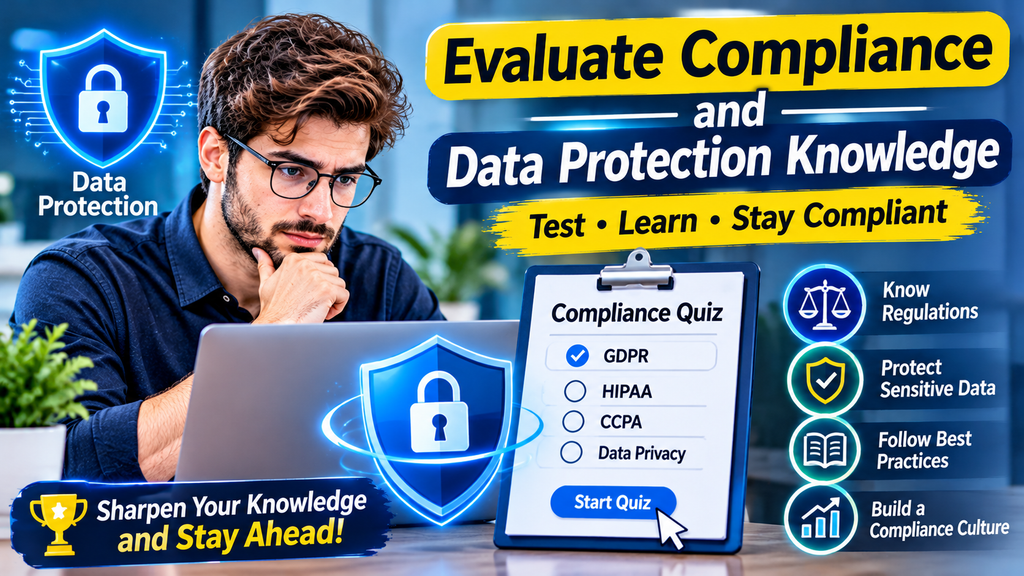
Businesses may need to follow specific security, privacy, and industry regulations. These requirements depend on their location, customers, operations, and the type of information they handle.
A knowledgeable cybersecurity provider should understand the standards and regulations relevant to your business.
Depending on your circumstances, these may include:
- GDPR
- HIPAA
- PCI DSS
- ISO/IEC 27001
- NIST Cybersecurity Framework
The provider should explain how its services support your compliance objectives.
However, be careful with companies that promise guaranteed compliance. Meeting regulatory requirements involves business processes, internal controls, employee responsibilities, and ongoing management.
Hiring a cybersecurity provider does not automatically make an organization compliant.
Review how the company handles sensitive information, stores security records, manages access, and protects client data.
7. Compare Pricing, Contracts, and Service Agreements
Cost is an important factor, but the cheapest cybersecurity provider is not always the best choice.
Some companies offer basic protection at affordable rates, while others provide advanced monitoring, security testing, and dedicated response teams at higher prices.
Compare pricing based on the services included rather than looking at the total cost alone.
Before signing an agreement, review:
- Initial setup and assessment costs
- Monthly or annual service fees
- Additional charges for emergency support
- Costs of security upgrades
- Contract renewal and cancellation terms
- Service-level agreements and response times
Pay attention to hidden charges. A provider may advertise a low monthly fee but charge extra for services your business actually needs.
Your agreement should clearly explain what the provider will manage and which responsibilities remain with your internal team.
8. Assess Transparency and the Provider’s Own Security Practices
A cybersecurity company should follow strong security practices within its own organization. After all, the provider may receive access to sensitive systems, business accounts, and confidential information.
Ask how the company protects its internal infrastructure and customer data.
Consider these questions:
- Does it use multi-factor authentication?
- How does it control employee access?
- Does it regularly assess its own systems?
- How does it protect customer information?
- Does it use subcontractors or third-party services?
- How does it report security incidents?
Also, ask whether the provider follows recognized security frameworks and maintains documented internal policies.
Transparency matters just as much as technical ability. A trustworthy partner should explain its methods, limitations, and responsibilities without making unrealistic promises.
9. Consider Communication, Scalability, and Long-Term Support
Cybersecurity is an ongoing responsibility. Your business may introduce new applications, hire employees, expand into different markets, or move more operations to cloud platforms.
Your cybersecurity partner should adapt as these changes occur.
Look for a company that offers:
- Regular security reports
- Clear communication with management
- Scheduled security reviews
- Practical recommendations
- Ongoing employee training
- Flexible services for future requirements
Communication is especially important during security incidents. Your provider should explain what happened, what actions are being taken, and what your business needs to do next.
Avoid companies that rely heavily on technical language without explaining the business impact.
A long-term relationship should involve regular improvements, not simply a monthly invoice and occasional security updates.
Important Questions to Ask Before Hiring a Cybersecurity Company
Once you have shortlisted potential providers, arrange a meeting to understand their services and working methods.
Here are some useful questions to ask:
- What cybersecurity services are included in your package?
- Do you have experience working with businesses in our industry?
- How do you identify and manage security vulnerabilities?
- Is security monitoring available around the clock?
- What is your incident response process?
- How do you protect sensitive customer information?
- Can you provide client references or relevant case studies?
- What happens if our business experiences a serious cyberattack?
- How will your services change as our business grows?
Pay attention to how clearly the company answers these questions. A dependable provider should welcome reasonable questions and provide straightforward explanations.
Red Flags to Avoid When Choosing a Cybersecurity Partner
Not every cybersecurity company offers the same level of reliability. Some warning signs may indicate that a provider is not suitable for your business.
Watch out for these issues:
Unrealistic security guarantees: No provider can promise complete protection against every cyberattack. Be cautious of companies that make such claims.
Unclear pricing: If a company cannot explain its charges or service limitations, ask for a detailed written proposal.
Limited incident response: A provider without a clear emergency support process may leave your business uncertain during a security incident.
No relevant experience: A lack of suitable experience or verifiable client references makes it harder to evaluate the company’s capabilities.
Poor communication: Delayed responses and confusing explanations can create serious problems when quick decisions are necessary.
Unclear data access policies: Avoid providers that cannot explain who can access your information and how that access is controlled.
The right partner should be open about its capabilities, limitations, and responsibilities.
Advantages and Disadvantages of Hiring a Cybersecurity Partner
Working with an external cybersecurity provider can offer valuable support, but businesses should understand both sides before making a commitment.
| Advantages | Disadvantages |
| Access to specialized security expertise | Ongoing service costs |
| Professional security monitoring | Dependence on an external provider |
| Support during security incidents | Possible communication delays |
| Reduced need for a large internal security team | Less direct control over some operations |
| Flexible security services | Quality may vary between providers |
The benefits can outweigh the disadvantages when businesses choose a suitable provider and establish clear contractual responsibilities.
However, outsourcing does not remove the company’s own responsibility for cybersecurity. Management and employees must continue following security policies and protecting business information.
How NIST Guidelines Can Help Businesses Evaluate Cybersecurity Providers
Businesses do not need to create their security evaluation process from scratch. Established frameworks can provide a useful structure.
The National Institute of Standards and Technology (NIST) Cybersecurity Framework 2.0 organizes cybersecurity outcomes into six key functions:
- Govern: Establish security policies, responsibilities, and risk management expectations.
- Identify: Understand business assets, systems, and potential risks.
- Protect: Apply safeguards to reduce security threats.
- Detect: Identify suspicious activity and possible security incidents.
- Respond: Take appropriate action when an incident occurs.
- Recover: Restore affected systems and business operations.
These functions provide a practical way to discuss security requirements with potential providers.
For example, ask a company how it supports threat detection, incident response, and recovery. Its answers will help you understand whether its services cover important areas of your security program.
You can explore the official NIST Cybersecurity Framework 2.0 to understand these functions and their role in cybersecurity risk management.
Frequently Asked Questions
1. How do I choose the right cybersecurity partner for my business?
Start by identifying your security needs, then compare providers based on technical expertise, industry experience, service offerings, incident response, pricing, and communication. Check references before signing a contract.
2. What services should a cybersecurity partner provide?
Common services include vulnerability assessments, penetration testing, network security, cloud protection, security monitoring, incident response, and employee awareness training. The right combination depends on your business requirements.
3. How much does it cost to hire a cybersecurity company?
Costs vary depending on business size, system complexity, service requirements, monitoring coverage, and contract terms. Request detailed proposals from multiple providers to compare their offerings fairly.
4. Is hiring an external cybersecurity provider better than building an internal team?
It depends on your resources and security needs. External providers can offer access to specialized expertise, while internal teams provide direct oversight. Some businesses benefit from combining both approaches.
5. How often should a business review its cybersecurity partner?
Review performance regularly, at least during scheduled service and contract reviews. Also reassess the relationship whenever your technology, business operations, or security requirements change.
Conclusion
Understanding How to Select a Cybersecurity Partner is essential for businesses that want to protect their systems, information, and customers. The right provider should offer relevant technical expertise, reliable incident response, transparent pricing, and services that support long-term business goals.
Before making a decision, assess your security requirements, compare potential providers, check client references, and review every contract carefully. Do not choose a company based on price or marketing promises alone.
Cybersecurity requires continuous attention, and your provider should help your business improve its protection as new challenges emerge. The long-term destiny of your security strategy depends on informed decisions, clear responsibilities, and consistent improvements.
A strong cybersecurity partnership is not just an IT expense. It is an investment in business continuity, customer trust, and a more secure future.