Supply Chain Planning Software helps businesses forecast demand, manage inventory, coordinate suppliers, and plan production more effectively. It connects important business information so companies can make better decisions about purchasing, manufacturing, storage, and product delivery.
Poor planning can create serious problems. A business may order too much stock, run out of popular products, experience production delays, or struggle to meet customer orders. These issues can increase operating costs and affect customer satisfaction.
Modern supply chain planning tools help businesses manage these challenges by organizing information and supporting coordinated planning. They can also help teams respond when customer demand, supplier availability, or market conditions change.
Whether you manage a manufacturing company, an online store, a wholesale business, or a distribution operation, understanding this technology can help you improve daily operations.
This guide explains what supply chain planning software is, how it works, its essential features, major benefits, possible risks, and how to choose the right solution.
What Is Supply Chain Planning Software?
Supply Chain Planning Software is a digital solution that helps organizations plan and coordinate activities involved in purchasing, producing, storing, and delivering products.
It uses business information to help companies estimate future demand, calculate inventory requirements, plan production, and coordinate supply with customer needs.
For example, imagine an online retailer preparing for a busy shopping season. The company needs to estimate how many products customers may order, check available warehouse stock, arrange purchases from suppliers, and prepare deliveries.
Supply chain planning software can bring these activities together. It helps managers understand whether existing inventory can meet expected demand and where additional supplies may be needed.
Depending on the platform, the software may support:
- Demand forecasting
- Inventory planning and optimization
- Supply planning
- Production scheduling
- Procurement planning
- Sales and operations planning
- Supplier collaboration
- Distribution planning
- Reporting and analytics
The main purpose is to connect different planning activities. This allows teams to make informed decisions instead of relying entirely on disconnected spreadsheets and manual calculations.
How Does Supply Chain Planning Software Work?
Supply Chain Planning Software collects information from different business systems and uses it to create coordinated plans. The exact process depends on the platform, but most solutions follow a similar workflow.
1. Collecting Business Data
The software gathers information from sources such as sales systems, inventory databases, purchasing records, production systems, and supplier information.
Accurate data is important because planning recommendations depend on the quality of the information available.
2. Forecasting Customer Demand
The system analyzes historical sales, current orders, seasonal patterns, and other relevant information to estimate future product demand.
For example, a clothing retailer may expect higher demand for winter jackets during colder months. Demand forecasting helps the company prepare inventory before orders increase.
3. Calculating Inventory Requirements
After estimating demand, the software helps determine how much stock should be available.
It may consider existing inventory, expected orders, supplier lead times, and safety stock requirements. This helps businesses avoid unnecessary purchases while reducing the risk of product shortages.
4. Planning Supply and Production
The system compares expected demand with available materials, supplier capacity, production resources, and delivery schedules.
If a manufacturer does not have enough raw materials, the software may identify the shortage and help managers adjust purchasing or production plans.
5. Reviewing and Executing Plans
Managers review recommendations, compare possible scenarios, and approve suitable actions.
Depending on the system’s integrations and configuration, approved plans can support purchase orders, production schedules, inventory transfers, and other operational activities.
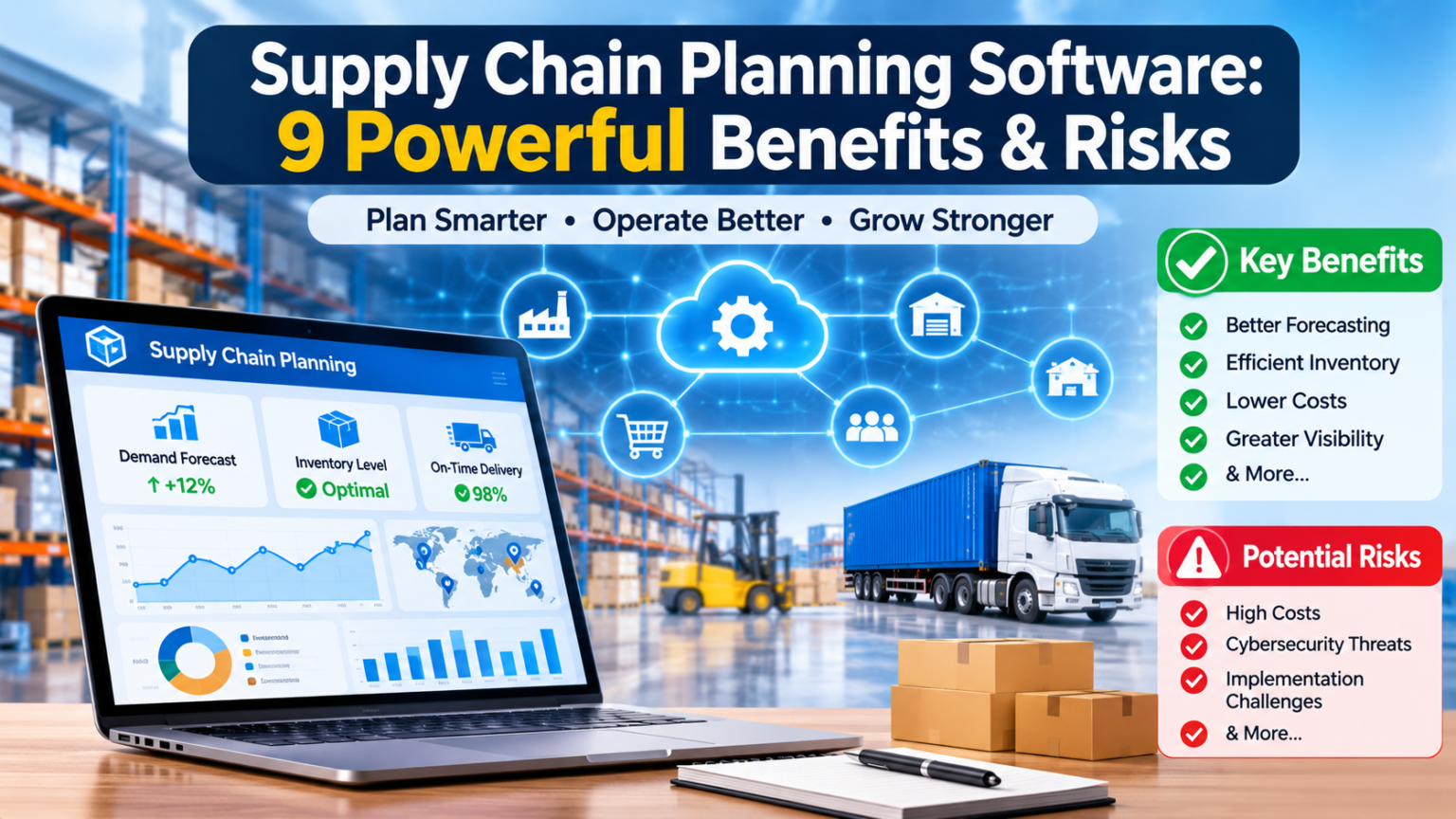
9 Powerful Benefits of Supply Chain Planning Software
The right planning solution can improve coordination across business operations. Here are nine important benefits.
1. More Accurate Demand Forecasting
Demand forecasting helps businesses estimate how many products customers may purchase in the future.
Planning software can analyze historical sales, seasonal trends, current orders, and other demand signals. This information helps managers prepare for changes instead of reacting only after stock levels become low.
For example, a grocery business can use previous sales patterns to estimate demand for seasonal products and plan purchases accordingly.
Forecasts are not always correct, but regular updates can help businesses respond to changing conditions.
2. Better Inventory Management
Keeping too much inventory increases storage and handling costs. Keeping too little can lead to missed sales and unhappy customers.
Supply chain planning tools help businesses review stock levels, expected demand, replenishment requirements, and supplier lead times.
This can help companies maintain more suitable inventory levels and reduce unnecessary stock accumulation.
3. Improved Supplier Coordination
Businesses often depend on multiple suppliers to obtain materials and finished products. Delayed communication or inaccurate delivery information can disrupt operations.
Supply chain planning software can help teams coordinate purchase requirements, supplier commitments, delivery schedules, and material availability.
Better coordination allows businesses to identify potential supply problems earlier and discuss alternatives with suppliers.
4. Reduced Operational Costs
Poor planning can create avoidable expenses, including emergency purchases, excess storage, production delays, and unnecessary transportation.
A planning solution helps businesses identify these issues and compare different operational options.
For instance, a company may discover that adjusting order quantities or delivery schedules could reduce unnecessary costs.
Actual savings depend on data quality, planning decisions, and the organization’s business processes.
5. Better Production Planning
Manufacturers need to coordinate raw materials, machines, employees, production capacity, and customer orders.
Planning software helps managers understand whether available production resources are sufficient to meet expected demand.
It can also help identify material shortages, capacity limitations, and scheduling conflicts before they affect production.
6. Greater Supply Chain Visibility
Businesses may struggle to understand what is happening across warehouses, suppliers, production facilities, and distribution centers.
Supply chain planning solutions can bring relevant information into shared dashboards and reports.
This makes it easier for teams to review inventory availability, demand changes, supplier performance, and potential delivery problems.
7. Faster Business Decisions
Manual planning often requires employees to collect information from multiple spreadsheets and departments.
An integrated system can reduce some of this work by organizing data and highlighting important changes.
Managers can use the available information to compare scenarios, review recommendations, and make decisions with better visibility.
8. Improved Customer Satisfaction
Customers expect products to be available and delivered within the promised timeframe.
When businesses plan inventory, production, and deliveries more effectively, they can reduce avoidable shortages and fulfillment delays.
Better planning does not guarantee perfect delivery performance, but it can support more reliable customer service.
9. Stronger Business Growth
As businesses expand, their supply chains may become more complex. They may add new suppliers, warehouses, product categories, and sales channels.
Supply chain planning software can help coordinate these activities through connected planning processes.
A suitable solution can support business expansion while giving managers better control over changing operational requirements.
Essential Features of Supply Chain Planning Software
Not every business needs the same planning features. However, several capabilities are particularly useful when comparing different solutions.
Demand Planning and Forecasting
Demand planning helps businesses estimate future customer requirements. Look for forecasting tools that support historical data analysis, seasonal patterns, forecast adjustments, and performance reviews.
Inventory Optimization
Inventory optimization helps determine suitable stock levels across different products and locations.
Useful capabilities may include safety stock calculations, replenishment recommendations, and inventory segmentation.
Supply Planning
Supply planning compares expected demand with available materials, supplier capacity, and production resources.
It can help identify shortages and recommend changes to purchasing or production plans.
Production Scheduling
Manufacturers can use production scheduling features to organize jobs, materials, machine capacity, and delivery commitments.
These tools are especially useful when production resources are limited or multiple orders compete for the same capacity.
Scenario Planning
Scenario planning allows managers to compare possible outcomes before making important decisions.
For example, a business can examine what may happen if supplier lead times increase or customer demand rises unexpectedly.
Reporting and Analytics
Dashboards and reports help teams review important measures such as inventory levels, forecast performance, supply shortages, and order fulfillment.
Integration Capabilities
A planning system should connect with relevant business applications, such as enterprise resource planning (ERP), warehouse management, procurement, and order management systems.
Integration reduces disconnected information and supports more consistent planning.
Cybersecurity Risks in Supply Chain Planning Software
Supply chain planning systems often handle sensitive business information, including supplier details, purchasing records, inventory data, production schedules, and customer orders. Protecting this information is an important part of choosing and managing the software.
Potential security concerns include:
- Unauthorized access to business accounts
- Weak passwords or poorly managed user permissions
- Exposure of confidential supplier information
- Insecure connections between business systems
- Data loss caused by inadequate backup practices
- Security weaknesses in third-party integrations
Businesses should use strong authentication, assign access according to job responsibilities, review user permissions regularly, and maintain reliable backups.
They should also understand the basic principles of cyber security to help protect business systems, networks, and sensitive information from unauthorized access and digital threats.
Supplier and technology risks also deserve attention. The National Institute of Standards and Technology (NIST) provides guidance on identifying, assessing, and managing cybersecurity risks across supply chains. Its Cybersecurity Supply Chain Risk Management Practices can help organizations understand the security risks associated with products, services, and technology suppliers.
Types of Supply Chain Planning Software
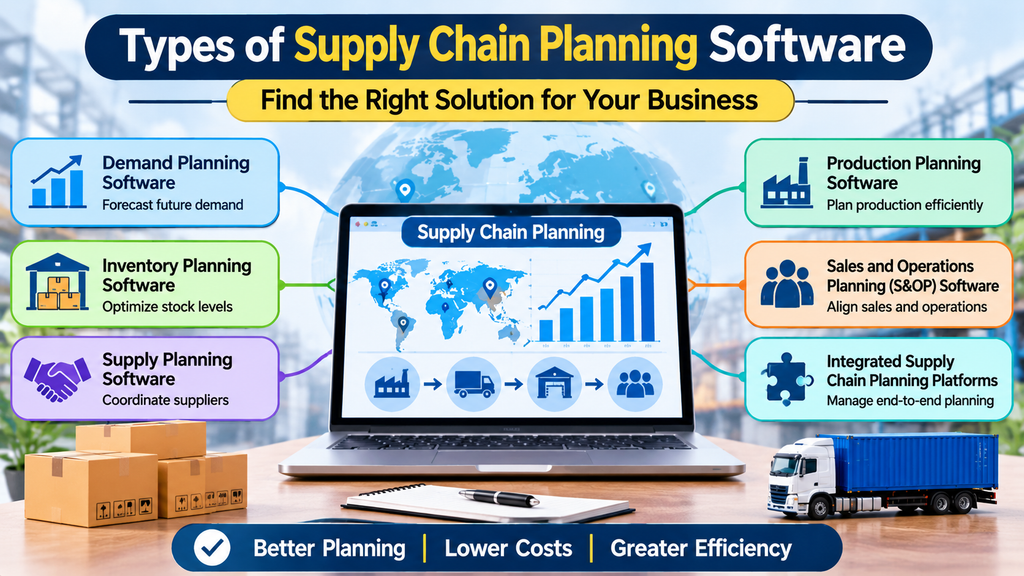
Different solutions focus on different planning requirements. Some businesses need a broad platform, while others require tools for a specific activity.
Demand planning software: Focuses on estimating future customer demand and preparing forecasts.
Inventory planning software: Helps businesses manage stock levels, replenishment, and safety stock.
Supply planning software: Coordinates materials, purchasing, supplier availability, and supply requirements.
Production planning software: Helps manufacturers organize production resources, schedules, and material requirements.
Sales and Operations Planning (S&OP) software: Supports coordination between sales, finance, operations, and supply chain teams.
Integrated supply chain planning platforms: Combine several planning activities into a connected environment.
The right type depends on the organization’s size, industry, supply chain structure, and operational challenges.
Advantages and Disadvantages of Supply Chain Planning Software
Although supply chain planning tools offer useful capabilities, businesses should understand their limitations before investing.
Advantages
- Better coordination between departments.
- Improved demand and inventory planning.
- Greater visibility into supply chain activities.
- More organized supplier communication.
- Reduced dependence on manual spreadsheets.
- Support for scenario analysis and decision-making.
- Better planning as business operations expand.
Disadvantages
- Software licensing and implementation can be expensive.
- Employees may need training before using the system effectively.
- Poor data quality can produce unreliable planning results.
- Integrating older business systems may be challenging.
- Complex platforms can require ongoing technical support.
- Forecasts cannot predict every market change or supply disruption.
A business should evaluate these limitations alongside the expected benefits. Buying software without improving data quality and planning processes may not deliver the expected results.
How to Choose the Best Supply Chain Planning Software
Choosing a solution requires more than comparing prices or selecting a platform with the largest number of features.
Start by identifying your biggest planning challenges. For example, a retailer may need better demand forecasting, while a manufacturer may need improved production scheduling and material planning.
Consider these factors before making a decision:
Business requirements: Identify whether you need demand planning, inventory optimization, production scheduling, or a complete planning platform.
Ease of use: Choose a system that employees can understand and use without unnecessary complexity.
Integration: Check whether the software connects with your existing ERP, warehouse, purchasing, and sales systems.
Scalability: Make sure the solution can support additional products, locations, suppliers, and users as your business grows.
Reporting: Review the dashboards and reports available. They should help managers understand important planning information.
Implementation support: Ask about data migration, system configuration, employee training, and technical assistance.
Total cost: Consider licensing, implementation, integration, training, maintenance, and future upgrades.
Before purchasing, request a demonstration using business scenarios similar to your actual operations. This can help you understand whether the platform meets your requirements.
Best Practices for Successful Implementation
Implementing supply chain planning software requires preparation and cooperation across departments.
Follow these practices to improve the implementation process:
- Define clear objectives: Decide which problems the software should solve, such as excess inventory or inaccurate demand forecasts.
- Review existing data: Remove outdated, duplicate, or incorrect information before transferring it.
- Involve key departments: Include employees from purchasing, sales, finance, production, and logistics.
- Start with essential features: Introduce the most important planning functions before expanding to more advanced capabilities.
- Train employees: Make sure users understand the system and know how to interpret its recommendations.
- Monitor performance: Review forecast accuracy, inventory levels, supplier performance, and planning results.
- Improve continuously: Adjust planning rules and processes when business requirements change.
Successful implementation is not only about installing software. It also requires reliable information, clear responsibilities, and consistent cooperation.
Frequently Asked Questions
1. What is supply chain planning software used for?
It helps businesses forecast demand, manage inventory, plan production, coordinate suppliers, and organize product distribution. Its purpose is to connect planning activities and support better operational decisions.
2. Who needs supply chain planning software?
Manufacturers, retailers, wholesalers, distributors, and growing businesses may benefit from it. It is particularly useful for organizations managing multiple products, suppliers, warehouses, or production activities.
3. What is the difference between supply chain planning and supply chain management?
Supply chain planning focuses on forecasting and preparing future activities, such as purchasing, production, and inventory requirements. Supply chain management covers the broader process of coordinating sourcing, production, storage, transportation, and delivery.
4. Can small businesses use supply chain planning software?
Yes. Small businesses can use planning tools to manage inventory, estimate demand, and organize purchasing. They should choose a solution that matches their current needs and budget rather than paying for unnecessary features.
5. Does supply chain planning software use artificial intelligence?
Some modern platforms use artificial intelligence and machine learning to analyze demand patterns, support forecasting, identify exceptions, and assist planning decisions. Available capabilities vary between software providers.
Conclusion
Supply Chain Planning Software helps businesses connect demand forecasting, inventory management, purchasing, production, and distribution planning. By organizing important information in one system, it can improve visibility, support better decisions, and help teams respond to changing business requirements.
However, software alone cannot solve every supply chain problem. Businesses also need accurate data, trained employees, reliable suppliers, and clear planning processes. They must also protect planning systems and supplier information from cybersecurity threats.
In a competitive market, the long-term destiny of a business can partly depend on how well it plans, adapts, and manages its resources. Before selecting a solution, compare its features, integration options, implementation requirements, and total cost. The right Supply Chain Planning Software should address your actual operational challenges and support your long-term business goals.