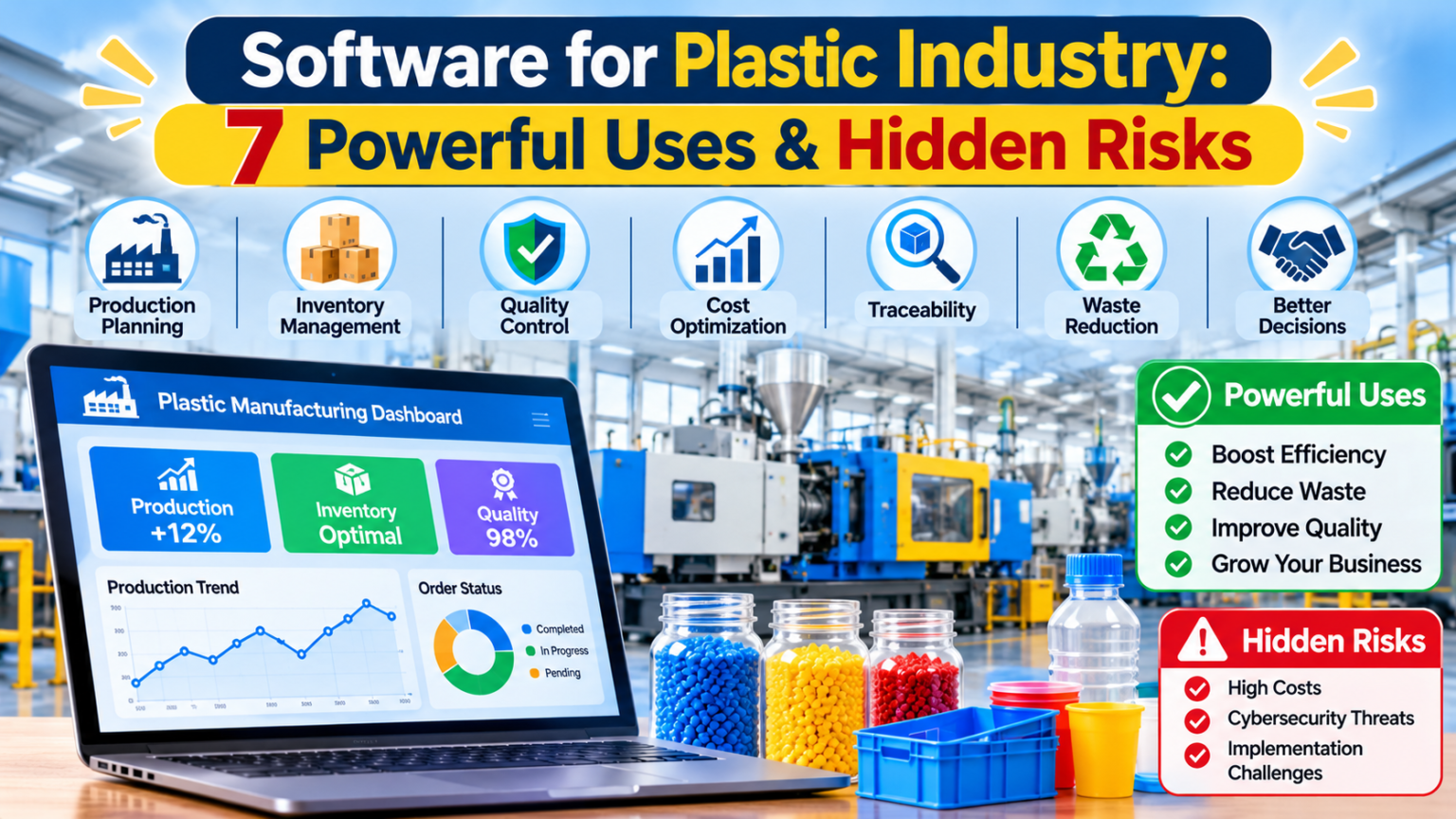
Software for Plastic Industry manufacturers helps businesses manage production, raw materials, inventory, quality control, and customer orders more efficiently. Plastic manufacturing involves several processes, including injection molding, extrusion, blow molding, thermoforming, and recycling. Each process requires accurate planning, reliable equipment, and proper material management.
Managing these activities through spreadsheets and manual records can create production delays, increase material waste, and make cost tracking difficult. The right software brings important business information together and helps manufacturers make better operational decisions.
Whether you operate a small plastic molding facility or a large manufacturing plant, understanding these software solutions can help you improve productivity and control costs. This guide explores the main types, essential features, benefits, risks, and selection criteria for plastic manufacturing software.
What Is Software for Plastic Industry?
Software for Plastic Industry businesses refers to digital systems designed to manage manufacturing and related business activities. These solutions help companies control operations from raw material purchasing and production planning to quality inspection, inventory storage, and product delivery.
Some platforms provide general manufacturing management features, while industry-specific solutions address the requirements of plastic production.
For example, an injection molding company may use software to schedule production orders, assign molds to machines, monitor material consumption, and record rejected parts. An extrusion manufacturer may need tools to track production quantities, material blends, machine performance, and product specifications.
Depending on the business, manufacturers can use an integrated Enterprise Resource Planning (ERP) platform or connect several specialized applications.
Types of Software for Plastic Industry Manufacturers
Different software solutions support different stages of plastic manufacturing. Understanding their functions makes it easier to select the right system.
1. Plastic Manufacturing ERP Software
Enterprise Resource Planning (ERP) software connects major business activities through one central platform. It can manage purchasing, inventory, production, sales, accounting, and order processing.
Industry-specific ERP systems may also support:
- Resin and raw material management
- Bills of materials and product recipes
- Production costing and financial reporting
- Scrap and regrind tracking
- Supplier and customer management
- Mold and tooling records
An integrated ERP system gives managers a clearer view of business performance and reduces the need to maintain separate records across departments.
2. Manufacturing Execution System (MES)
A Manufacturing Execution System monitors and manages activities on the factory floor. It connects production planning with actual manufacturing operations.
MES software can collect information about machine performance, production quantities, downtime, and material usage. Supervisors can use this information to identify interruptions and review production performance.
For example, an injection molding facility may use MES to monitor machine cycles, record rejected products, and investigate production delays.
3. Production Planning and Scheduling Software
Production planning software helps manufacturers decide what to produce, when to produce it, and which resources to use.
It considers customer deadlines, machine availability, mold capacity, material availability, production quantities, and changeover requirements.
This solution is especially useful for factories handling multiple products, colors, materials, and customer orders.
4. Inventory and Warehouse Management Software
Inventory management software helps businesses monitor raw materials, additives, colorants, packaging, work in progress, and finished products.
It can provide information about stock levels, storage locations, batch numbers, and purchase requirements. Some systems also support barcode scanning and automatic inventory updates.
Accurate stock records help prevent unnecessary purchases and reduce production delays caused by missing materials.
5. Quality Management Software
Quality management software helps manufacturers maintain product standards throughout production. It records inspection results, identifies defects, and supports corrective actions.
Plastic manufacturers may use it to monitor dimensions, weight, color, strength, surface appearance, and other product specifications.
Digital inspection records also make it easier to investigate recurring problems and identify areas that need improvement.
6. Product Lifecycle Management (PLM) Software
PLM software manages product information from initial design through development and manufacturing.
It can store technical drawings, material specifications, product revisions, and engineering documents. This helps teams work with accurate information when developing new plastic products or modifying existing designs.
7. Mold and Tool Management Software
Molds and tools are essential assets in processes such as injection molding. Their condition can directly affect production quality and efficiency.
Mold management software helps companies record tool usage, maintenance schedules, repair history, and service requirements. It can also help managers identify tools that need attention before they interrupt production.
Essential Features of Plastic Manufacturing Software
The right system should match the company’s production methods and operational requirements. However, several features are particularly valuable across the plastics sector.
Material and recipe management: Track resin types, additives, colorants, material blends, and product specifications.
Production monitoring: Record production quantities, machine activity, cycle times, downtime, and rejected items.
Batch tracking and traceability: Connect raw material batches with production orders and finished products. This information helps businesses investigate quality issues and respond to customer complaints.
Scrap and regrind management: Record material waste and recycled production material. Accurate tracking supports better material planning and costing.
Mold and machine management: Maintain equipment records, service schedules, and production assignments.
Quality control: Store inspection results and identify patterns in product defects.
Reporting and analytics: Use dashboards and reports to understand costs, production performance, inventory levels, and delivery progress.
Before purchasing a system, ask the provider to demonstrate these features using realistic examples from your manufacturing process.
7 Powerful Uses and Benefits of Software for Plastic Industry
Suitable manufacturing software can improve several areas of business operations. The actual results depend on the selected system, implementation process, and employee adoption.
1. Improve Production Efficiency
Manual production planning can make it difficult to coordinate machines, materials, employees, and customer orders. Software brings this information together and helps managers organize production more effectively.
It can also highlight delays and machine interruptions, allowing supervisors to respond sooner.
2. Strengthen Inventory Control
Plastic manufacturers often handle different grades of resin, additives, colorants, and packaging materials. Without accurate records, businesses may purchase excess stock or run short of essential materials.
Inventory software provides better stock visibility and helps purchasing teams plan replenishment according to production requirements.
3. Reduce Material Waste
Material waste can affect manufacturing costs and profitability. Software can record scrap, regrind, and material consumption for individual production orders.
Managers can review these records to identify where waste occurs and investigate opportunities to improve material usage.
4. Maintain Consistent Product Quality
Digital quality records help manufacturers compare inspection results across production runs, machines, and material batches.
When defects appear, teams can review production information to investigate possible causes and take corrective action. This supports more consistent quality management.
5. Improve Production Costing
Manufacturing software can bring together material, labor, machine, energy, and overhead costs. It may also account for scrap and production yield.
This gives managers a clearer understanding of product costs and helps them make informed pricing and budgeting decisions.
6. Strengthen Material Traceability
Traceability allows manufacturers to follow materials through production and delivery. Batch records can help identify which raw materials were used in a particular order and where finished products were sent.
This information is useful when investigating complaints, quality problems, or product recalls.
7. Support Better Business Decisions
Integrated reports help managers understand production performance, stock requirements, costs, and delivery progress.
Instead of relying only on assumptions or disconnected spreadsheets, decision-makers can use more consistent operational information to plan improvements and support business growth.
Advantages and Disadvantages of Plastic Manufacturing Software
Although software can improve factory management, manufacturers should understand its limitations before investing.
Advantages
- Centralizes important business and production information.
- Improves coordination between departments.
- Supports better material and inventory planning.
- Helps monitor production performance.
- Strengthens quality records and traceability.
- Makes reporting and cost analysis easier.
Disadvantages and Potential Risks
High initial costs: Licensing, hardware, implementation, and training can require a significant investment.
Implementation challenges: Moving existing records and adapting workflows may take time.
Employee resistance: Staff members may need training and support before they become comfortable with new systems.
Cybersecurity threats: Connected software can expose business information if access controls and security practices are weak.
Integration difficulties: Older machines or business applications may not connect easily with new software.
Dependence on accurate data: Incorrect material, machine, or production records can lead to unreliable reports and poor decisions.
Manufacturers can reduce these risks by planning implementation carefully, checking system compatibility, and establishing suitable security procedures.
Cybersecurity and Internet Safety in Plastic Manufacturing
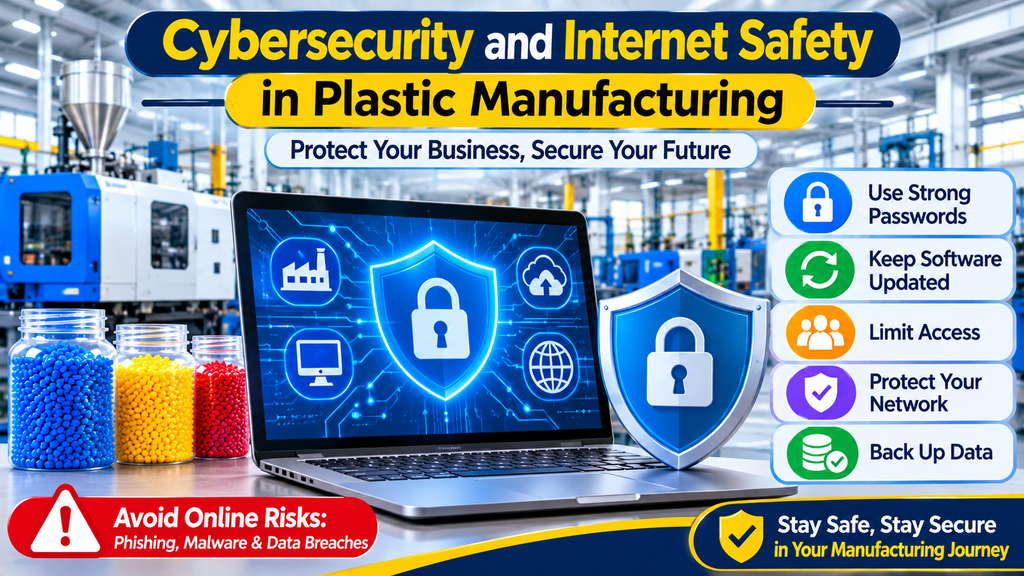
Modern manufacturing software may connect office computers, production equipment, warehouse systems, suppliers, and cloud platforms. These connections improve information sharing, but they can also introduce cybersecurity risks.
Unauthorized access, weak passwords, outdated software, and poorly protected networks may expose sensitive business information or disrupt operations.
Manufacturers should follow basic internet safety practices, including using strong passwords, limiting employee access, updating software, maintaining backups, and monitoring connected devices.
Businesses can learn more from this guide to internet safety practices and digital protection. These practices are useful when protecting company accounts and connected business systems.
The National Institute of Standards and Technology (NIST) also provides Cybersecurity for the Manufacturing Sector guidance. It explains ways organizations can protect industrial control systems and manufacturing information from unauthorized access and other threats.
How to Choose the Right Software for Plastic Industry Operations
Selecting software requires more than comparing prices or counting features. The system should match your manufacturing processes and business goals.
Understand Your Production Requirements
Start by identifying your main manufacturing activities. An injection molding business may need strong mold management and machine scheduling, while an extrusion manufacturer may prioritize process monitoring and material control.
List the problems you want the software to solve before contacting providers.
Check Industry-Specific Features
Ask whether the system supports the materials and processes you use. Important capabilities may include resin tracking, multiple units of measurement, product recipes, scrap management, regrind calculations, and batch traceability.
A generic manufacturing platform may require additional customization to handle these requirements.
Evaluate Integration Options
Check whether the software can connect with your existing accounting tools, machines, barcode scanners, warehouse systems, and other applications.
Good integration can reduce duplicate data entry and improve information flow between departments.
Review Reporting and Customization
Make sure the system provides useful reports for production, inventory, quality, and costs. Ask whether dashboards and reports can be adjusted to match your management requirements.
Consider Support and Employee Training
A software provider should offer clear implementation guidance, employee training, technical support, and system updates.
Ask about support availability, service costs, and the process for resolving technical problems.
Compare Total Ownership Costs
Do not focus only on the initial license price. Consider implementation, customization, training, maintenance, upgrades, integrations, and ongoing subscription fees.
Request a demonstration using realistic manufacturing scenarios before making a final decision.
How to Implement Plastic Manufacturing Software Successfully
A structured implementation process can help manufacturers avoid unnecessary disruption.
- Review existing operations: Document production workflows, inventory practices, quality checks, and reporting requirements.
- Set clear objectives: Decide what improvements the business expects from the software.
- Prepare existing data: Organize product records, material information, supplier details, and machine records.
- Test the system: Run practical scenarios before using the software across the entire factory.
- Train employees: Teach each department how to use the features relevant to its responsibilities.
- Monitor performance: Review results after launch and correct problems as they appear.
Starting with a limited production area or department can help businesses identify issues before expanding the system across the factory.
Frequently Asked Questions
What is the best software for plastic manufacturing?
The best option depends on the company’s size, production methods, and operational needs. Manufacturers should compare industry-specific ERP, MES, inventory, and quality management solutions before selecting a system.
Is ERP software useful for plastic manufacturers?
Yes. ERP software can connect purchasing, inventory, production, sales, and financial management. Industry-specific ERP systems may also support mold tracking, material recipes, scrap management, and batch traceability.
Can manufacturing software support injection molding?
Yes. Suitable systems can help manage production orders, machine schedules, mold usage, material consumption, cycle information, and quality records.
How does software reduce plastic manufacturing waste?
It can record material consumption, scrap, and regrind usage. Managers can analyze these records to identify waste patterns and improve production planning.
Is cloud-based software suitable for plastic manufacturers?
Cloud-based software can provide access to business information across different locations, depending on internet connectivity and system design. Manufacturers should review data security, backup policies, integration requirements, and offline capabilities before choosing a cloud solution.
Conclusion
Choosing the right Software for Plastic Industry operations can help manufacturers improve production planning, manage materials, monitor quality, and control costs. Solutions such as ERP, MES, inventory management, and quality software support different parts of the manufacturing process.
However, successful results depend on selecting a system that matches the factory’s actual requirements. Businesses should compare features, integration options, implementation costs, employee training, and long-term support before making a decision.
The long-term destiny of a plastics manufacturer can be influenced by how effectively it manages production, resources, and technology. With the right software and a well-planned implementation, manufacturers can build more organized, efficient, and competitive operations.