Introduction
What Is SEO in Digital Marketing, and why does it matter for businesses that want to grow online? Search Engine Optimization (SEO) is the process of improving a website so that search engines can understand its content and show relevant pages to people searching for information, products, or services.
Think about the last time you searched for something on Google. You probably clicked one of the results that appeared near the top of the page. Businesses want their websites to appear in those positions because better visibility can bring relevant visitors, potential customers, and new opportunities.
However, SEO is not simply about adding keywords to website pages. It involves useful content, website performance, technical improvements, relevant links, and a clear understanding of what people are searching for.
For beginners, learning SEO can seem complicated at first. The good news is that you can understand its main principles by breaking the process into smaller steps. This guide explains how SEO works, its main types, its benefits and risks, and how to start building an effective strategy.
What Is SEO in Digital Marketing?
SEO stands for Search Engine Optimization. It refers to the methods used to improve a website’s visibility in unpaid search engine results.
When someone searches for a particular topic, search engines examine numerous pages to identify results that best match the query. SEO helps website owners make their content easier to discover, understand, and navigate.
For example, imagine someone searches for “best running shoes for beginners.” A sports website with a helpful buying guide, relevant product information, clear headings, and a well-organized structure may have a better chance of appearing in relevant search results.
SEO focuses on attracting people who are already interested in a topic, product, or service. Unlike paid advertising, organic search traffic does not require a payment for every click.
However, achieving strong search visibility takes time, consistent effort, and attention to quality.
How Does SEO Work?
Search engines use automated systems to discover and organize information across the internet. Google’s search process generally involves three main stages.
1. Crawling
Crawling is the process of discovering web pages. Search engine bots, often called crawlers or spiders, follow links and examine website content to find new or updated pages.
A website with clear navigation and accessible links makes it easier for crawlers to discover its important content.
2. Indexing
After discovering a page, a search engine may analyze its text, images, videos, and other information. It can then store useful information about that page in its index.
Being indexed means a page can potentially appear in search results. However, indexing does not guarantee a particular ranking.
3. Ranking
When someone enters a search query, search engines evaluate many signals to determine which results are most relevant and useful.
These signals can include content relevance, page experience, quality, context, and other factors.
The goal of SEO is to help search engines understand your website while giving visitors a useful experience.
4 Main Types of SEO in Digital Marketing
A successful SEO strategy usually combines several areas. Each one supports a different part of website optimization.
1. On-Page SEO
On-page SEO involves improving individual website pages to make their content more useful and understandable.
Important activities include:
- Using relevant keywords naturally.
- Writing clear SEO titles and meta descriptions.
- Organizing content with H1, H2, and H3 headings.
- Adding descriptive image alt text.
- Linking to relevant pages within your website.
- Creating helpful and well-structured content.
For example, a blog about digital marketing can use descriptive headings to explain keyword research, content optimization, and search visibility.
The main objective is to make each page useful for its intended audience.
2. Off-Page SEO
Off-page SEO includes activities performed outside your website to improve its reputation and visibility.
Link building is one of its important elements. It involves earning relevant backlinks from other websites that point to your content.
For instance, a digital marketing website might receive a backlink from an established business publication. Such a link can help readers discover the website and provide additional context about its content.
Other off-page activities include:
- Digital PR.
- Brand mentions.
- Relevant industry collaborations.
- Guest contributions.
- Earning natural editorial backlinks.
However, not every backlink is valuable. Links should come from relevant and trustworthy sources. Buying or exchanging links solely to manipulate rankings can create search-related risks.
3. Technical SEO
Technical SEO focuses on improving the technical foundation of a website so search engines can access, crawl, and understand its pages.
Common technical SEO tasks include:
- Improving website loading speed.
- Making pages mobile-friendly.
- Fixing broken links.
- Managing duplicate content.
- Creating XML sitemaps.
- Checking indexing problems.
- Using secure HTTPS connections.
- Improving website navigation.
A technically sound website makes it easier for both visitors and search engines to access important information.
4. Local SEO
Local SEO helps businesses appear in search results connected to a particular location.
It is especially useful for restaurants, shops, clinics, service providers, and other businesses that serve customers in specific areas.
For example, someone searching for “digital marketing agency in Lahore” may see local business listings and relevant websites.
Local SEO activities include:
- Creating and maintaining a Google Business Profile.
- Keeping business information accurate.
- Collecting genuine customer reviews.
- Using location-specific keywords naturally.
- Maintaining consistent business details across relevant directories.
These activities help nearby customers find businesses when they need their services.
Why Is SEO Important for Businesses?
SEO plays an important role in digital marketing because it helps businesses reach people who are actively searching for relevant information or services.
Here are some reasons businesses invest in SEO.
1. Increases Organic Website Traffic
A well-optimized website can attract visitors from search engines without paying for every click. When pages appear for relevant searches, they can generate consistent traffic over time.
2. Builds Brand Awareness
Appearing in relevant search results helps more people discover a business. Even when visitors do not click immediately, repeated visibility can make a brand more familiar.
3. Improves User Experience
Good SEO encourages website owners to improve navigation, content structure, mobile usability, and loading performance. These improvements make websites easier to use.
4. Supports Long-Term Growth
Paid advertising usually stops generating traffic when a campaign ends. SEO, on the other hand, can continue attracting visitors as long as pages remain relevant, accessible, and competitive.
5. Helps Generate Potential Customers
SEO can connect businesses with people who already have an interest in their products or services. This makes organic search a useful source of potential leads and sales.
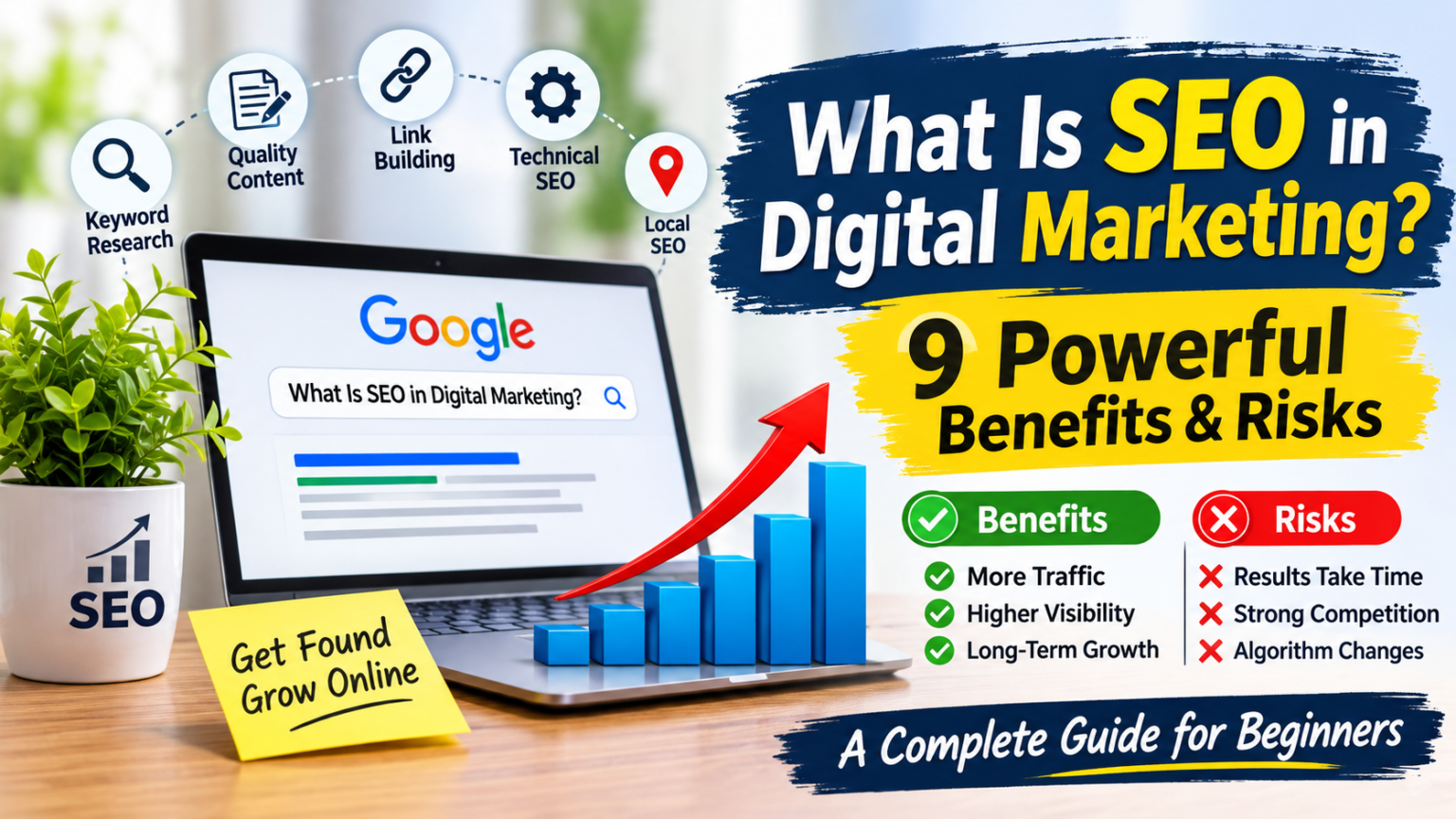
9 Powerful Benefits and Risks of SEO
SEO offers several advantages, but it also comes with challenges. Understanding both sides helps businesses set realistic expectations.
Benefits of SEO
1. Cost-Effective Marketing
Organic search traffic does not involve paying for each individual click. Although SEO requires investment in content, tools, and professional work, it can provide long-term value.
2. Better Online Visibility
Higher visibility in relevant search results gives businesses more opportunities to reach their target audience.
3. Improved Website Credibility
Users often consider websites appearing in relevant search results as useful options. High-quality content, trustworthy information, and a professional website can help build confidence.
4. Targeted Audience Reach
SEO attracts visitors based on their search interests. A business selling office furniture, for example, can create content for people searching for office desks, chairs, and workplace solutions.
5. Long-Term Marketing Opportunities
Useful pages can continue receiving organic traffic beyond their original publication date. Regular updates help keep information accurate and relevant.
Risks and Challenges of SEO
6. Results Can Take Time
SEO is not an instant marketing solution. New websites may need considerable time to establish visibility, build relevant links, and compete with established businesses.
7. Search Engine Updates Can Affect Rankings
Search engines regularly improve their systems. These changes can affect website visibility, which is why businesses should focus on helpful content and sound SEO practices rather than short-term tricks.
8. Competition Can Be Difficult
Popular keywords often have strong competition. Small businesses may find it difficult to compete with established websites that have more resources and authority.
9. Poor SEO Practices Can Cause Problems
Keyword stuffing, manipulative link building, copied content, and misleading optimization techniques can harm a website’s performance. Businesses should follow search engine guidelines and prioritize quality.
How to Start SEO as a Beginner
Learning SEO does not require mastering every technical concept at once. Beginners can start with a few practical steps and gradually improve their knowledge.
Step 1: Understand Your Target Audience
Before creating content, identify the people you want to reach.
Consider their interests, common questions, problems, and search habits. Understanding your audience helps you create pages that answer real questions instead of publishing content without a clear purpose.
Step 2: Perform Keyword Research
Keyword research helps identify the terms people use when searching online.
Start by writing down topics related to your website. Then explore relevant search suggestions and keyword research tools.
For example, a website about digital marketing might target terms such as:
- SEO basics for beginners
- Organic search traffic
- On-page SEO techniques
- Technical SEO checklist
- Keyword research methods
- Search engine optimization strategy
Choose keywords that match your content and the reader’s search intent. A keyword with a large search volume is not always the best choice if it does not attract the right audience.
Step 3: Create Helpful Content
Content should answer the reader’s question clearly and provide enough information to help them take the next step.
Use descriptive headings, practical examples, and relevant explanations. Avoid repeating the same keyword simply to increase its frequency.
A useful article should offer something readers can understand and apply.
Step 4: Optimize Website Pages
Review your important website pages and improve their titles, headings, URLs, images, and internal links.
Make sure every page has a clear purpose. Use descriptive anchor text when linking to related content so visitors know what to expect.
For a practical example of how SEO strategies can support online store visibility, explore this e-commerce SEO case study. It can help readers understand how optimization applies to a real business-focused scenario.
Step 5: Improve Technical Performance
Check whether your website works properly on mobile devices and loads efficiently.
You should also review indexing issues, broken links, and sitemap configuration. Tools such as Google Search Console can help identify search performance and technical problems.
For further guidance, Google’s official SEO Starter Guide explains how website owners can help search engines discover, crawl, and understand their content.
Step 6: Monitor Results
SEO requires regular monitoring. Track organic clicks, impressions, search queries, indexing, and changes in website performance.
Google Search Console is a useful starting point, while analytics tools can help you understand how visitors interact with your website.
Use the information to improve pages that are not meeting their goals.
Common SEO Mistakes Beginners Should Avoid
Many beginners focus too heavily on rankings and overlook the quality of their websites. Avoid these common mistakes:
- Keyword stuffing: Repeating keywords unnaturally makes content difficult to read.
- Ignoring search intent: Content should match what people actually want to find.
- Publishing copied content: Original information provides more value than simply rewriting another website’s article.
- Neglecting mobile users: Pages should work properly on different screen sizes.
- Building irrelevant backlinks: Backlinks should provide genuine relevance and value.
- Ignoring website updates: Outdated information can reduce the usefulness of a page.
- Expecting instant results: SEO requires patience, testing, and consistent improvement.
Another mistake is focusing only on search engines. A website should also support the reader’s journey, whether that means answering a question, explaining a service, or helping someone make a purchase.
Frequently Asked Questions About SEO
1. What Is SEO in Digital Marketing in Simple Words?
It is the process of improving a website so it can appear more prominently in unpaid search engine results. It helps people discover relevant websites when searching for information, products, or services.
2. Is SEO Free or Paid?
Organic SEO does not charge businesses for individual search clicks. However, businesses may spend money on SEO professionals, content creation, website improvements, and research tools.
3. How Long Does SEO Take to Show Results?
There is no fixed timeline. Some improvements may become visible within weeks, while meaningful results can take several months or longer, depending on competition, website condition, and the work involved.
4. Can Beginners Learn SEO?
Yes. Beginners can learn SEO through practical experience, official documentation, online resources, and regular website optimization. Starting with keyword research and helpful content is a good approach.
5. What Are the Most Important Types of SEO?
The four main types are on-page SEO, off-page SEO, technical SEO, and local SEO. Each supports a different aspect of website visibility and performance.
Conclusion
Understanding What Is SEO in Digital Marketing is an important first step for anyone who wants to build an online presence. SEO helps websites become easier to discover by improving their content, technical structure, relevance, and overall user experience.
For beginners, the best approach is to start with keyword research, publish useful content, improve website performance, and build relevant links naturally. It is also important to monitor results and make improvements as search behavior changes.
SEO has both opportunities and challenges. It requires patience, consistency, and a willingness to learn. However, businesses that focus on providing genuine value can build a stronger online presence and create a more sustainable path toward digital growth. With the right strategy, even a small website can work toward its own online destiny.