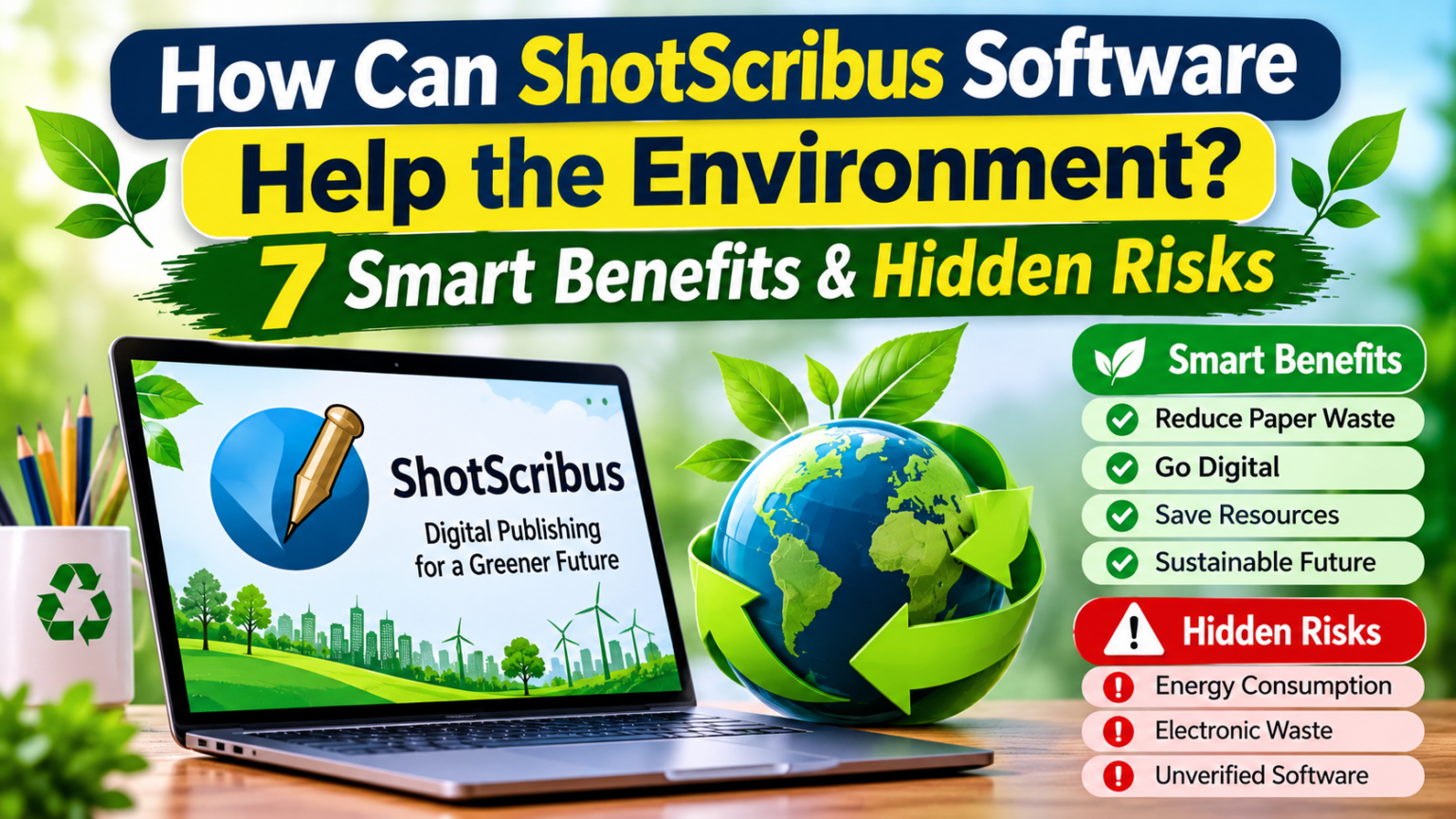
ShotScribus Software is a keyword associated with digital software and sustainable technology. However, its exact identity and officially documented environmental features are not clearly established. Therefore, it is important to separate verified information from general benefits of digital publishing and responsible software use.
Digital tools can help reduce paper consumption, simplify document editing, and support online collaboration. At the same time, computers, servers, and digital storage consume electricity and require physical hardware. This means technology can support environmental goals, but its impact depends on how people use it.
In this article, we explore seven practical ways digital publishing workflows can support sustainability, the possible environmental risks, and the steps users can take to make more responsible technology choices.
What Is ShotScribus Software?
The name ShotScribus Software is not clearly established as a separate, officially documented software product with verified environmental features. It may be confused with other applications, including Scribus, a desktop publishing program, or Shotcut, a video-editing application. These are separate software projects.
For this reason, users should verify the exact product name, official website, developer, and download source before installing an application. It is also important not to assume that a tool has specific green features unless its documentation or reliable testing supports that claim.
The environmental discussion below focuses on digital publishing and software workflows that can reduce unnecessary resource use. These benefits are possible outcomes of responsible digital practices, not confirmed features of an unverified ShotScribus product.
How Can ShotScribus Software Support Environmental Sustainability?
Digital publishing can reduce the need for some paper-based activities. However, the actual environmental benefit depends on the software, the user’s workflow, and the amount of energy and equipment involved.
Here are seven practical sustainability opportunities.
1. Reduce Paper Consumption
One of the clearest potential benefits of digital publishing is reducing unnecessary printing. People can create, edit, review, and share documents electronically instead of printing every draft.
For example, a business preparing a product catalogue can distribute a digital version to customers. It may then print only the number of physical copies that are genuinely needed.
Using fewer printed pages can help reduce demand for paper, ink, packaging, and transportation. It can also reduce paper waste in offices and educational institutions.
However, digital documents do not automatically eliminate paper use. Organizations should review their printing habits and choose digital distribution when it is practical.
2. Make Document Editing More Efficient
Traditional document production can involve several printed drafts. Every correction may require another printout, especially when multiple people review the same material.
A digital workflow allows users to revise text, adjust layouts, and correct errors before producing a final copy. This can reduce repeated printing and make the publishing process more efficient.
For example, a marketing team can review a brochure on screen, collect feedback, and make the necessary changes in one working file.
Efficient editing can save time and materials. Still, users should avoid unnecessary high-powered devices or excessive processing when simple editing tasks require fewer resources.
3. Support Digital Document Distribution
Online document sharing can reduce the need to transport physical reports, brochures, newsletters, and manuals.
A company can publish a PDF or another suitable digital format on its website. Customers and employees can access the information without requiring a printed copy for every reader.
Digital distribution may also make updates easier. Instead of printing an entirely new batch, an organization can replace an outdated file with a revised version.
For businesses building an online presence, SEO in digital marketing can help make useful digital resources easier for people to discover through search engines.
Nevertheless, online distribution still uses electricity, networks, and data storage. Organizations should create useful files, avoid unnecessary duplication, and remove outdated content when appropriate.
4. Reduce Reprinting Through Easier Updates
Printed materials can become outdated when prices, contact details, policies, or product information change. Updating a printed document often means producing another batch.
Digital publishing offers a more flexible approach. A business can update an online brochure, instruction guide, or product catalogue without automatically printing a replacement.
This approach may reduce wasted paper and printing materials, especially when information changes frequently.
For example, a training organization can update its digital handbook whenever a process changes. Learners can then access the latest version rather than receiving repeated printed copies.
However, organizations should make sure that old versions are clearly identified or removed when they contain incorrect information.
5. Encourage Remote Collaboration
Digital collaboration allows teams to review and improve documents without always meeting in one physical location.
Team members can share files, provide feedback, and approve content online. This may reduce unnecessary travel for meetings and document reviews.
For example, a publishing team working in different cities can collaborate on a report through shared digital files. Each member can contribute without travelling to a central office.
Remote collaboration may save time and reduce travel-related emissions. However, the environmental result depends on the wider working arrangement, including internet use, device consumption, and whether remote work actually replaces travel.
6. Improve Digital Storage and File Management
Organized digital storage can help businesses manage documents more efficiently. Clear file names, folders, version control, and regular reviews make it easier to locate the correct information.
Good file management can also prevent unnecessary copies and reduce confusion between outdated and current documents.
For example, a company can maintain one approved version of a report instead of storing several duplicate files across different devices.
However, digital storage also has an environmental cost. Servers and storage systems require electricity and physical equipment. Keeping every unused file forever can increase storage demand.
Users should remove unnecessary duplicates, archive important records appropriately, and select storage services based on their actual needs.
7. Encourage Responsible Technology Choices
Sustainability is not only about reducing paper. It also involves considering the energy and hardware needed to create, store, and distribute digital content.
Users can make more responsible choices by selecting suitable software, avoiding unnecessary background processes, and keeping devices in service for longer when they remain safe and functional.
Businesses can also ask technology providers about energy efficiency and environmental reporting rather than relying on vague green claims.
The Green Software Foundation’s Software Carbon Intensity specification explains a methodology for assessing software-related carbon emissions. It considers energy use, the carbon intensity of electricity, and emissions associated with hardware.
This provides a more evidence-based way to discuss software sustainability than simply describing an application as environmentally friendly.
Advantages of Sustainable Digital Publishing
Responsible digital publishing can offer several practical advantages:
- Less unnecessary printing: Digital documents can reduce the number of physical copies required.
- Faster updates: Online materials can be corrected without automatically reprinting entire documents.
- Convenient access: Readers can access suitable digital files from different locations.
- Easier collaboration: Teams can review content without always exchanging printed drafts.
- Better organization: Consistent file management can reduce duplication and confusion.
- Flexible distribution: Businesses can share information with customers and employees online.
These advantages depend on how digital tools are used. They should not be treated as guaranteed environmental savings for a particular application.
Hidden Environmental Risks of Digital Software
Digital technology can support more efficient workflows, but it also creates environmental challenges. Understanding these risks helps users make better decisions.
1. Electricity Consumption
Computers, monitors, networks, and servers require electricity. Long working sessions and unnecessary background activity can increase energy use.
Users can reduce avoidable consumption by adjusting power settings, closing unused applications, and switching off equipment when it is not needed.
2. Electronic Waste
Old computers and other electronic devices can become electronic waste. Improper disposal may create environmental and health concerns.
Extending the useful life of suitable equipment, repairing devices, and using authorized recycling services can help reduce this problem.
3. Digital Storage Demand
Large files, repeated backups, and unused copies can increase storage requirements. Data centres need hardware, electricity, and cooling systems to operate.
A sensible file-management policy can help organizations avoid storing unnecessary data indefinitely.
4. Unverified Software Downloads
Downloading software from unknown websites can expose users to malware, unwanted programs, or misleading product claims.
Before installing any application, verify its developer and official download source. Check available documentation and avoid suspicious installers.
5. Greenwashing and Unsupported Claims
Some technology products may be described as eco-friendly without clear evidence. A green logo or sustainability statement does not prove that an application reduces emissions.
Users should look for measurable information, transparent methods, and credible environmental reporting before accepting such claims.
How to Use Digital Publishing Tools More Sustainably
The following practices can help individuals and organizations reduce unnecessary resource use:
- Print only when necessary: Use digital copies for routine reviews and communication.
- Choose efficient devices: Use equipment that meets your needs without unnecessary power consumption.
- Keep devices longer: Repair and maintain suitable hardware instead of replacing it too quickly.
- Organize files: Remove unnecessary duplicates and manage older versions responsibly.
- Use trusted software sources: Download applications from verified developers or official websites.
- Review storage needs: Avoid keeping unnecessary large files and backups.
- Measure environmental impact: Use credible methods and available data instead of making unsupported sustainability claims.
These steps are useful across many digital publishing workflows, regardless of the software brand.
Is ShotScribus Software an Environmentally Friendly Choice?
There is not enough verified information to label ShotScribus Software itself as environmentally friendly or to confirm that it provides specific sustainability features.
A fair assessment would require reliable details about the actual application, including its developer, functionality, energy requirements, hardware needs, and environmental performance.
If you are referring to Scribus or another established publishing tool, assess that specific application using its official documentation and your own workflow. Consider whether it helps reduce unnecessary printing and whether its use creates additional digital resource demands.
The best approach is to evaluate measurable results rather than relying on a product name or marketing statement.
Frequently Asked Questions
1. Can ShotScribus Software reduce paper waste?
A digital publishing workflow can reduce paper waste when users share, review, and distribute documents electronically instead of printing unnecessary copies. However, this is a general benefit of digital workflows, not a verified feature of ShotScribus Software.
2. Is ShotScribus Software a verified environmental application?
Its exact identity and environmental capabilities are not clearly established through reliable product documentation. Users should verify the application and its developer before relying on claims about its features.
3. Does digital publishing have an environmental impact?
Yes. Digital publishing uses electricity, internet networks, storage systems, and electronic devices. Its overall impact depends on energy consumption, hardware requirements, and how efficiently the technology is used.
4. How can businesses make digital publishing more sustainable?
Businesses can reduce unnecessary printing, organize digital files, extend device lifespans, use trusted software, and review their storage and energy requirements. They can also use recognized measurement approaches to understand their software-related emissions.
5. What should users check before installing unfamiliar software?
Users should verify the official website, developer identity, download source, system requirements, privacy information, and security documentation. They should avoid suspicious download pages and installers.
Conclusion
ShotScribus Software is a keyword that needs careful treatment because its exact product identity and environmental features are not clearly verified. However, sustainable digital publishing practices can help reduce unnecessary printing, improve document management, and support more efficient collaboration.
At the same time, digital tools require electricity, storage, and physical devices. Their environmental impact should therefore be assessed realistically rather than described through unsupported green claims.
By choosing trusted software, managing files responsibly, extending device lifespans, and measuring resource use, individuals and businesses can make more informed technology decisions. The future—and ultimately the destiny—of sustainable digital publishing depends on practical improvements, transparent measurement, and responsible innovation.