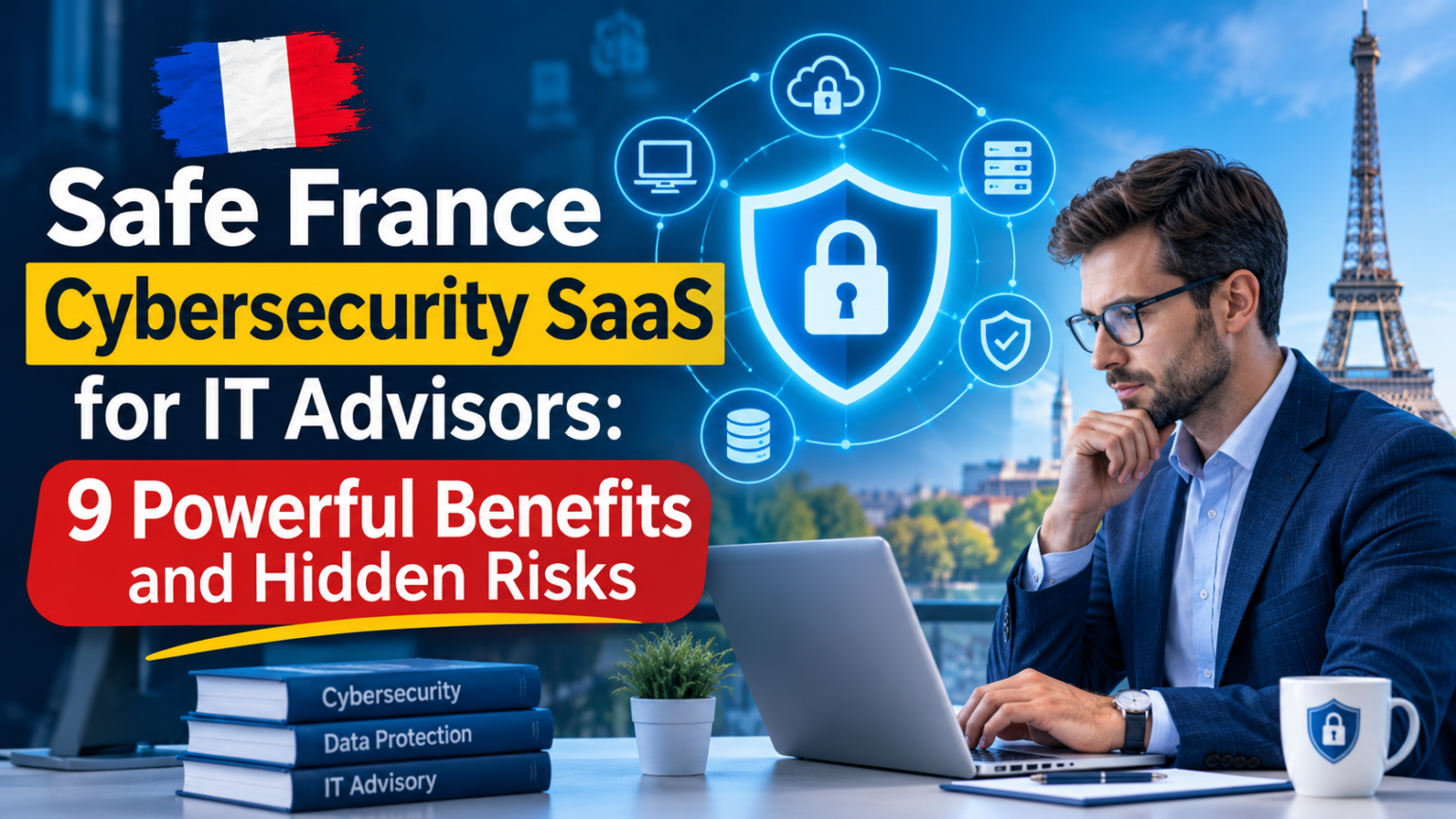
Safe France cybersecurity SaaS for IT advisors is becoming increasingly important as businesses rely on cloud-based tools to manage sensitive information, protect digital operations, and respond to growing cyber threats. IT advisors help organisations choose secure technology, manage risks, and maintain reliable systems. However, selecting the wrong platform can expose business data and create serious security problems.
French businesses must consider more than convenience when choosing cybersecurity software. They also need to evaluate data protection, regulatory requirements, access controls, threat monitoring, and provider reliability. The right solution can strengthen digital operations, while poor security decisions may create hidden risks.
This guide explores nine powerful benefits of cybersecurity SaaS for IT advisors in France, essential platform features, potential challenges, and practical steps for choosing a reliable solution.
What Is Safe France Cybersecurity SaaS for IT Advisors?
Safe France cybersecurity SaaS for IT advisors refers to cloud-based security software and services that help IT professionals protect business systems, networks, applications, and digital information. SaaS stands for Software as a Service, meaning users access software through the internet instead of installing and maintaining every component locally.
These platforms may provide endpoint protection, threat detection, identity management, vulnerability monitoring, security reporting, and data protection tools. Depending on the provider, IT advisors can manage several client environments through a central dashboard.
For French organisations, security decisions should also consider the General Data Protection Regulation (GDPR), relevant French cybersecurity guidance, and industry-specific obligations.
Why Is Cybersecurity SaaS Important for French IT Advisors?
Cyber threats continue to affect businesses of every size. Phishing, ransomware, stolen credentials, and vulnerable applications can interrupt operations and expose confidential information.
IT advisors often support organisations that do not have large internal cybersecurity teams. SaaS security platforms can help them monitor multiple systems, identify suspicious activity, and respond to incidents more efficiently.
France also has a strong regulatory and cybersecurity environment. Advisors must understand how cloud services handle information, where data is processed, and what security responsibilities belong to the provider and customer.
A suitable platform can support this work, but no software can guarantee complete protection. Effective cybersecurity requires technology, clear policies, employee awareness, and continuous monitoring.
9 Powerful Benefits of Cybersecurity SaaS for IT Advisors
1. Centralised Security Management
Managing different security tools across multiple clients can become complicated. Cybersecurity SaaS platforms often provide central dashboards that allow IT advisors to monitor important security activities from one location.
This approach can make it easier to review alerts, check device status, manage policies, and identify unusual behaviour. It also reduces the need to switch between several disconnected systems.
Centralised management is particularly useful for advisors supporting businesses with remote employees or multiple office locations.
2. Faster Threat Detection
Cyberattacks can develop quickly. A delayed response may allow attackers to access additional systems or steal more information.
Many SaaS security solutions include automated monitoring and threat detection capabilities. These tools can analyse activity, identify suspicious patterns, and generate alerts for further investigation.
IT advisors can use these alerts to prioritise serious incidents and recommend appropriate responses. However, automated detection should not replace professional review because some alerts may be false positives.
3. Flexible and Scalable Protection
Business security requirements change as organisations grow. A small company may initially need basic endpoint protection, while a larger organisation may require advanced monitoring, identity controls, and additional security features.
Cloud-based SaaS platforms can make it easier to increase or reduce services according to business needs.
This flexibility helps IT advisors recommend solutions that match current requirements without forcing every client to purchase an unnecessarily complex system.
4. Reduced Infrastructure Management
Traditional security systems may require organisations to maintain dedicated servers, install updates, and manage additional infrastructure.
With SaaS platforms, the provider generally manages the underlying software infrastructure and routine platform maintenance. This can reduce the technical workload for internal teams.
Nevertheless, customers remain responsible for important areas such as user permissions, secure configuration, employee access, and appropriate data handling.
5. Better Security Visibility
IT advisors need accurate information to understand the security condition of their clients’ systems.
Cybersecurity SaaS platforms may provide dashboards, activity reports, vulnerability information, and incident notifications. These features help advisors identify weaknesses and explain security concerns to business owners.
Better visibility also supports more informed decisions about software updates, access permissions, and security improvements.
6. Support for Data Protection
Protecting personal and business information is a major responsibility for organisations operating in France.
Reliable cybersecurity platforms may offer encryption, access controls, backup features, and monitoring tools that support data protection efforts.
IT advisors should examine how a provider stores, processes, transfers, and protects information. They should also review contractual terms and data-processing arrangements.
For additional guidance, consult the French National Cybersecurity Agency (ANSSI), which publishes cybersecurity recommendations and resources.
7. Improved Support for Remote Teams
Remote and hybrid working have expanded the number of devices and networks that businesses must protect.
Employees may access company information from home offices, shared workspaces, or different locations. This creates additional security challenges, especially when devices are not properly configured.
Cloud-based security tools can help IT advisors monitor endpoints, apply access policies, and identify suspicious activity across distributed environments.
However, employees must also follow safe practices, including using strong passwords, enabling multi-factor authentication, and avoiding suspicious links.
8. More Efficient Client Support
IT advisors often manage several client accounts and need to provide clear updates about security issues.
A suitable SaaS platform can simplify reporting, alert management, and routine security checks. Some solutions also support automation, allowing advisors to reduce repetitive administrative tasks.
This can create more time for strategic planning, risk assessments, and client communication.
9. More Predictable Security Planning
Many SaaS providers offer subscription-based pricing. This can help businesses understand recurring software costs and plan their security budgets.
However, advisors should review the complete pricing structure. Additional charges may apply for extra users, devices, storage, premium features, or technical support.
A clear comparison of total costs helps clients avoid unexpected expenses and choose a solution that supports long-term security goals.
Essential Features to Look for in a Cybersecurity SaaS Platform
Not every security platform provides the same level of protection. IT advisors should evaluate the following features before recommending a service.
Identity and Access Management
A strong platform should help organisations control who can access systems and sensitive information. Multi-factor authentication, role-based permissions, and secure login management are important capabilities.
Endpoint Protection
Endpoints include laptops, desktop computers, mobile devices, and servers. Security tools should help identify malware, suspicious activity, and other potential threats across these devices.
Threat Monitoring and Alerts
Real-time monitoring can help security teams identify unusual behaviour. Advisors should examine how alerts are generated, prioritised, and investigated.
Data Encryption and Backup
Encryption helps protect information from unauthorised access. Backup and recovery features can also support business continuity after accidental deletion, system failure, or ransomware incidents.
Security Reporting
Clear reporting helps advisors understand security performance and communicate important findings to clients. Look for reports that explain risks, incidents, and recommended improvements.
Compliance Support
Businesses operating in France may need to consider GDPR and other applicable requirements. A provider should offer clear information about its security controls, data processing practices, and relevant certifications.
Remember that using a particular SaaS platform does not automatically make an organisation compliant with every legal requirement.
Understanding French Cloud Security and Compliance
France has specific cybersecurity guidance for organisations that use cloud services. IT advisors should understand the security expectations relevant to their clients and the sensitivity of the information being processed.
ANSSI provides guidance on cloud security and the SecNumCloud qualification framework. SecNumCloud is particularly relevant when organisations need to evaluate cloud service providers against demanding security requirements.
However, qualification applies to the specific service and scope concerned. It should not be treated as automatic approval of every product, configuration, or application offered by a provider.
Advisors should also consider GDPR responsibilities, including lawful data processing, appropriate technical safeguards, and clear agreements with service providers.
How Cybersecurity Attacks Can Affect Businesses
Cybersecurity attacks can cause financial losses, operational disruption, reputational damage, and exposure of confidential information.
Common threats include:
- Phishing: Attackers use deceptive messages to steal passwords or sensitive information.
- Ransomware: Malicious software can encrypt files and demand payment.
- Credential theft: Stolen login details may allow unauthorised access to business accounts.
- Malware: Harmful software can damage devices or collect confidential data.
- Data breaches: Unauthorised access may expose customer or employee information.
IT advisors should help clients understand these threats and develop practical prevention strategies. Businesses can also explore this guide to common cybersecurity attacks and their risks to understand different attack methods and improve their security awareness.
How to Choose the Right Cybersecurity SaaS Provider in France
Selecting a provider requires careful evaluation. IT advisors should consider the following steps:
1. Identify Business Requirements
Start by understanding the organisation’s size, industry, technology environment, and security priorities. A small business may need a different solution from a financial institution or healthcare organisation.
2. Review Security Capabilities
Examine encryption, access management, endpoint protection, monitoring, backup, and incident response features. Confirm that the platform addresses the client’s actual risks.
3. Understand Data Processing
Ask where information is stored and processed. Review data residency options, subcontractors, data transfers, retention policies, and contractual responsibilities.
4. Check Provider Transparency
A trustworthy provider should clearly explain its security practices, service limitations, incident notification procedures, and support arrangements.
5. Compare Pricing and Support
Evaluate subscription costs, additional charges, service availability, and technical assistance. The cheapest platform may not provide the protection or support a business requires.
6. Test Before Full Deployment
Where possible, use a trial or pilot project before introducing the platform across the organisation. Testing helps identify compatibility issues and configuration problems.
Common Mistakes IT Advisors Should Avoid
Even a reliable platform can become ineffective when businesses use it incorrectly. IT advisors should avoid these common mistakes:
- Choosing software based only on price.
- Ignoring employee cybersecurity training.
- Giving users unnecessary administrative permissions.
- Failing to review security alerts.
- Assuming cloud providers manage every security responsibility.
- Ignoring backup and recovery testing.
- Treating a certification as a guarantee of complete security.
- Delaying software updates and vulnerability fixes.
A practical security strategy should combine suitable technology with regular reviews, clear policies, and employee awareness.
The Future of Cybersecurity SaaS in France
Cybersecurity SaaS is likely to continue developing as organisations adopt cloud applications, artificial intelligence, and connected technologies.
AI-assisted monitoring may help security teams identify unusual patterns more quickly. Automated security workflows may also reduce repetitive tasks and improve incident handling.
At the same time, new technologies can introduce additional risks. IT advisors will need to evaluate how providers use customer data, protect AI-supported systems, and manage access to sensitive information.
The destiny of secure digital transformation will depend on responsible technology adoption, informed decisions, and continuous improvement. Businesses that treat cybersecurity as an ongoing priority will be better prepared to manage changing threats.
Frequently Asked Questions
What is cybersecurity SaaS?
Cybersecurity SaaS is cloud-based software that provides security services through an internet connection. It may include threat detection, endpoint protection, identity management, and security monitoring.
Is cybersecurity SaaS suitable for small businesses in France?
Yes. It can help small businesses access security tools without maintaining all the underlying infrastructure themselves. The right platform depends on business requirements, budget, and risk level.
What should IT advisors check before recommending a SaaS security provider?
They should evaluate security features, data processing practices, access controls, provider transparency, compliance support, pricing, and technical assistance.
Does using cybersecurity SaaS guarantee GDPR compliance?
No. A security platform may support data protection, but GDPR compliance also depends on how an organisation collects, processes, stores, and manages personal information.
What is SecNumCloud?
SecNumCloud is an ANSSI qualification framework for cloud service providers. It helps organisations assess cloud services against specific security requirements and should be checked against the exact service being considered.
Conclusion
Safe France cybersecurity SaaS for IT advisors can help organisations strengthen digital protection, improve threat visibility, and manage security activities more efficiently. Its nine key benefits include centralised management, faster threat detection, scalability, reduced infrastructure responsibilities, and improved client support.
However, selecting a platform requires more than comparing features and subscription prices. IT advisors must examine data protection, access controls, provider transparency, compliance responsibilities, and incident response capabilities.
The strongest approach combines reliable technology with employee awareness, regular security reviews, and responsible cloud management. By making informed decisions, IT advisors can help French businesses build safer and more resilient digital environments.